Tag: Well-being

Transformation Openness: A Pathway to Self-Guided Growth

Listen to the full podcast episode here: Podcast SL014

In an era marked by complexity, disruption, and exponential technological advances, transformation is no longer a choice—it’s a constant. But how we engage with it makes all the difference. In my latest podcast episode, I explore a key capacity I call “transformation openness”: a self-leadership skill that enables you to actively and mindfully navigate change.
Unlike passive flexibility or chaotic reinvention, transformation openness is about grounded, intentional openness. It involves embracing uncertainty while staying aligned with your identity and values.
Drawing on leading psychological models like the Transtheoretical Model, ACT, and Bandura’s concept of self-efficacy, I introduce a five-phase model:

Denial and Resistance: Recognize fear-based responses and create emotional safety.
Ambivalence and Awareness: Clarify values and imagine alternate futures.
Decision and Preparation: Ensure your next steps are congruent with your identity.
Action and Integration: Focus on feedback loops and daily rituals.
Reflection and Identity Growth: Let change become part of who you are.

Importantly, transformation openness also requires caution:
Over-adaptability can disconnect you from your core.
Openness should not mean compliance with every trend.
Resistance should be respected, not suppressed.
True growth needs time and recovery.

The episode closes with five practical invitations:
Notice resistance
Clarify your values
Prepare for small, meaningful actions
Respect your personal rhythm
Stay in dialogue

These practices turn insight into momentum and help you shape change from within.
If you’re facing transitions in your leadership role, your career, or your identity, this episode is for you.

Listen to the full episode of “Self-Leadership with Dr. Bensmann” here.

Back from Colombia

– and still deeply inspired.

Our journey through Colombia this July was far more than a professional project. It was a vivid, immersive experience – filled with powerful impressions, generous encounters, and deep learning moments. Together with my partner Anja Termöllen, I spent three weeks exploring the cultural, linguistic, and institutional landscape of Colombia – with the goal of expanding our international engagement in the fields of self-leadership, coaching, and health-oriented development.

Photo: Bensmann

Starting in Bogotá, we took in the city’s topography from Monserrate, reflected on identity and history at several museums, and engaged in inspiring conversations with the AHK Bogotá – special thanks to Carolina Santana and Mischa Groh – about leadership and resilience. We discussed potential future formats, and these exchanges once again demonstrated how relevant the topics of conscious self-leadership, resilience, and mindfulness are across cultural boundaries.

Photo: AHK Bogotá

In Medellín, the next stage began: a custom-designed language and cultural immersion course, created and led by our outstanding language teacher Rubén Montoya. During intensive days – including field trips, mountain walks, and shared reflections – we worked on translating our professional language and concepts into Spanish. I am especially grateful that Rubén tailored the sessions around our core topics such as self-leadership, mindfulness, and coaching. ¡Gracias de corazón, Rubén!

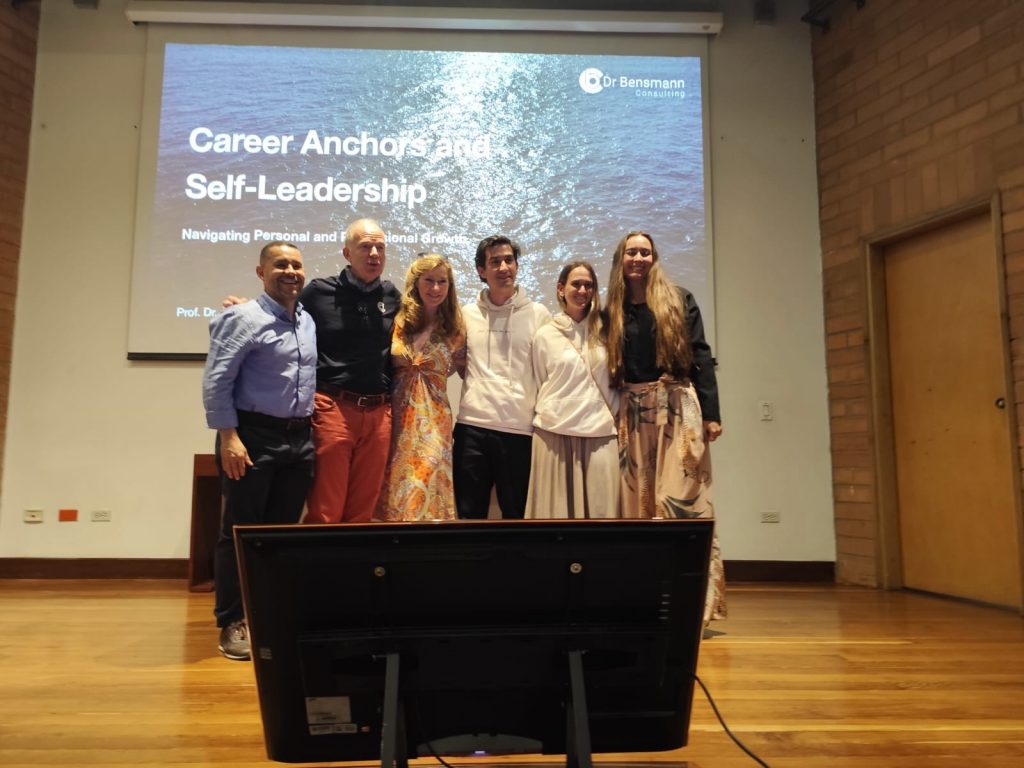
A personal highlight for both Anja and me was the opportunity to co-teach at EAFIT University in Medellín, where we presented key insights on Career Anchors and Self-Leadership to a highly engaged audience of students, faculty, and university leaders. Many thanks to Pablo Ángel for facilitating this opportunity and for his thoughtful support throughout the process. Thanks as well to Ana Maria Ortega Alvarez, Christina Velez-Valencia, and Fernando Alexander Garzón-Lasso – to name just a few of our supporters. And thank you to #CarstenSchröder for making the connection to EAFIT! This experience confirmed my belief that the concept of self-leadership is globally relevant – and that Colombia has the potential to become a long-term partner in developing future formats.

Photo: EAFIT

Anja and I also had the pleasure of meeting Catalina Vergara from Awaris Latam, with whom we exchanged perspectives on resilience and mental fitness in organizations. The connection between her work and the self-leadership approach I’ve been refining for over 15 years was both surprising and promising.

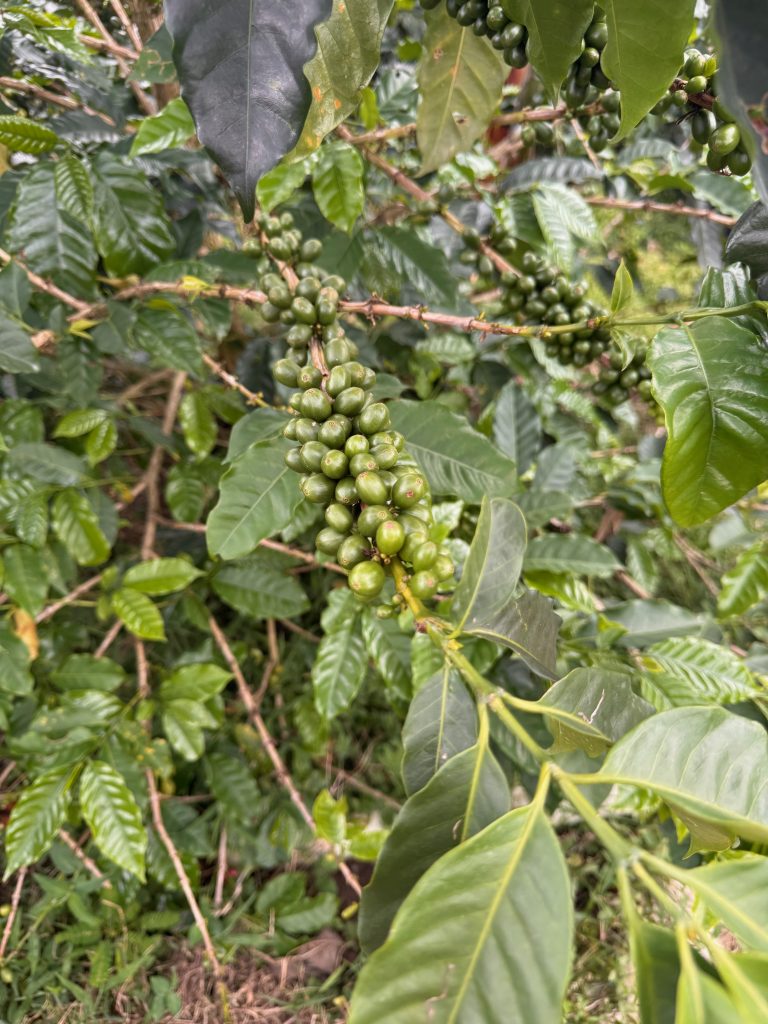
Another unforgettable chapter of our journey was our stay on a small coffee farm in the Eje Cafetero region. Immersed in nature, surrounded by lush greenery and cloud forests, we experienced the meticulous process of coffee cultivation – from bean to cup. It was not just educational, but deeply touching: we were warmly welcomed into the everyday life of the farm, sharing meals, stories, and routines with our hosts.

Photo: Bensmann

A heartfelt thank-you to Estrella and Carmen for your generosity and for making us feel part of the family. This stay offered us an important additional perspective on Colombia – one rooted in rural life, community spirit, and respect for manual craftsmanship. It reminded us how connected well-being, culture, and sustainability are – and how valuable it is to slow down and truly observe.

Looking ahead, this journey has inspired us to move forward with:

  • Tailor-made workshops for leaders of #AHKs in South America
  • Ideas for bilingual retreat formats
  • Local and international cooperation around health & leadership
  • A hybrid Spanish-language self-leadership micro-course or masterclass
  • Deeper integration of cultural awareness into our coaching practice

Colombia touched us – professionally, intellectually, and emotionally.
We return not only with new connections and friendships, but with a sense of clarity, fresh perspectives, and renewed energy.

SL012 Take Care Of Yourself – Body, Soul, and Mind

The Third of the Seven Fields of Self-Leadership

When was the last time you took a real break—no phone, no agenda, just space to breathe?
Do you trust your own thoughts, or are you being silently shaped by your social feed?
And how well do you actually take care of your body, your soul, and your mind?
Do you create moments for reflection—or are you always rushing to the next thing?

In this episode, we explore the third field of my Seven Fields of Self-Leadership model:
Body, Soul, and Mind.
This field brings together your physical awareness and care, your spiritual and emotional depth, and your mental agility.
Taken together, they form the foundation for resilience, clarity, and sustainable performance.
We’ll look at how small daily habits—mental, physical, emotional—shape your ability to lead yourself and others effectively.
And I’ll ask you a few bold questions to help you check in with yourself.

Part 1 – Body: Rhythm, Rituals, Resilience
Let’s begin with the body—our most tangible starting point.
True self-leadership means being in touch with your physical self. That includes listening to your natural rhythms, caring for your energy reserves, and building rituals that support performance and recovery.
So I ask you:
What rhythms shape your day?
Do you work with your body—or against it?
In my coaching conversations, I hear repeatedly that many leaders find balance and clarity through endurance sports, yoga, or even long silent walks. It’s not about becoming a fitness guru—it’s about building a sustainable foundation for your mind to work at its best.
Simple rituals—like a morning stretch, drinking water consciously, or a walk between meetings—can reset your inner balance.
And yes, it requires self-discipline. But that’s the essence of self-leadership: choosing what sustains you instead of what merely stimulates you.

Part 2 – Mind: Thought Patterns and Mental Models
Let’s shift to the mind—your beliefs, assumptions, and inner dialogue.
What do you believe about yourself, especially when facing a challenge?
Do you trust in your capacity to shape outcomes—or do you fall into doubt?
Here, the concept of self-efficacy is crucial. Introduced by Albert Bandura, it describes our belief in our ability to handle situations and produce results.
It’s not motivational fluff—it’s a scientifically backed mindset that makes the difference between action and avoidance.
If your inner narrative says “I’ll figure it out,” you’re already on your way.
If it says “I always mess this up,” your actions—and your results—will follow that script.
This is why working on your thought patterns is not optional for self-leadership. It’s core work.
Start by identifying your internal stories. Where did they come from? Are they still serving you?
I invite you to revisit our earlier episode, Self-Leadership and Mental Strength. You’ll find practical tools and deeper insights there—just head over to bensmann-consulting.com/self-leadership-and-mental-strength.

Part 3 – Soul: Inner Attitude, Purpose, and Flow Balance
Now to the soul—perhaps the most elusive, yet most essential dimension.
In this context, soul refers to your sense of meaning, inner peace, and emotional balance. It also includes your values, your attitude toward life, and your ability to reflect and recalibrate.
Too many high-performing people operate on a transactional level: tasks, goals, results.
But without depth and alignment, even the most “successful” lives can feel hollow.
So here’s the key idea:
Don’t aim for a static work-life balance—it doesn’t exist. Instead, strive for a flow balance between your life areas.
Like a mobilé, the balance constantly shifts. When one part moves, others adjust.
A mobile is a kinetic sculpture made of delicately balanced or suspended components that move in response to air currents or motor power.
Which part of your mobilé is out of sync right now?
What would help you recalibrate?
It’s also time to ask yourself:
When was the last time you allowed yourself to be bored?
Leisure isn’t laziness. It’s a form of mental hygiene.
Brain researchers like Daniel Goleman emphasize that our attention, like a muscle, fatigues. We need periods of aimlessness, nature, and stillness to restore cognitive power.
Go outside. Leave the phone. Watch the clouds.
In these unstructured moments, our best ideas—and deepest calm—often surface.

Part 4 – Mindfulness and Strength for the Future
Mindfulness isn’t just a buzzword—it’s a necessity.
As trend researcher Matthias Horx puts it, mindfulness means that we’re not helplessly driven by our emotions. We become observers of our inner landscape. We develop a meta-awareness—watching ourselves think, feel, and act.
That’s powerful. That’s leadership.
Because mindful people don’t just react—they choose.
This is where you can begin right away:

  • Start a small daily ritual—like 5 minutes of silence or journaling.
  • Identify a limiting belief—and reframe it.
  • Move your body intentionally, even if just for 10 minutes.
    Over time, these tiny acts become anchors.

Excursus – Leading Yourself in the Age of AI
Let’s take a brief detour.
Self-leadership today also means understanding the systems that influence us—one of the most powerful being Artificial Intelligence.

AI already curates your news, shapes your social media feed, and suggests what you should think, buy, or do next.
But here’s the key: AI is not just a technological topic—it’s a leadership topic.

As I’ve discussed in recent blog posts and podcast episodes, AI systems are increasingly acting like invisible advisors.
They can support your productivity—or subtly steer your attention.
That’s why self-leadership in the age of AI means building a personal “AI cockpit”: a conscious overview of where and how AI influences your life and work.

You don’t have to be a tech expert.
But you do need clarity:
What tools actually serve your mission?
Which systems support your well-being, your focus, your values?

Ask yourself:
Are you leading the tools—or are the tools leading you?

AI-Based Call-to-Action
So here’s your second challenge for this week:
Take 10 minutes to reflect on your digital environment.

  • What AI-powered tools do you use daily?
  • Are they aligned with your personal goals—or are they just noise?
  • Can you reclaim one part of your attention?

Choose one app or tool and either remove, replace, or reframe how you use it.
Self-leadership in a digital age begins with conscious choices—both analog and algorithmic.

Final Reflections and Action
So, how do we bring it all together?

  1. Nourish your body – movement, sleep, nutrition.
  2. Train your mind – challenge old thought patterns.
  3. Listen to your soul – what’s really meaningful now?
  4. Rebalance your life areas – adjust like a mobilé, not a scale.
  5. Protect your attention – especially from digital overload.
    And above all:
    What would it mean for you to lead yourself well—today?

Music Into & Outro by Joakim Karud http://soundcloud.com/joakimkarud

SL010 Personal Development with AI 

Hands-On Tool Tips for Leaders

Are you curious how AI can help you as a leader develop and grow?
Have you wondered how artificial intelligence can enhance your everyday tasks—not just automate them?
What if AI could become a powerful tool in your personal growth journey as a leader?

In this episode, I’ll show you how you, as a leader, can use AI effectively for your personal development. I’ll walk you through five key ways AI can support your learning and growth journey—and offer practical tips to integrate these tools into your daily life.

I’ve already shared some of my personal experiences in various blog posts (https://bensmann-consulting.com/news/) – especially in the article “Coaching with AI?” (https://bensmann-consulting.com/coaching-with-stage-and-backstage/)  as well as in several podcast episodes.

For me, it has become part of my daily routine to work with tools like ChatGPT, Perplexity, Grok, and others. I often combine them—for instance, I let Perplexity critically evaluate and revise the results of a ChatGPT query.

A Missed Opportunity?

I am surprised that many top executives still haven’t integrated the use of AI tools into their leadership routines. Sometimes it’s a lack of awareness, sometimes it’s uncertainty about where to start, and often it’s simply being too busy. But what if using AI could actually give you more time, not take it away? Think of AI as your invisible co-pilot—always ready to help you learn faster, reflect deeper, and focus sharper. 
Let us look at five fields where you can benefit from using AI-tools.

1. Language Learning and Personal Skills Development

AI is transforming how we learn, especially when it comes to languages and communication.

  • Apps like Duolingo and Babbel personalize language lessons to your progress, making learning efficient and engaging.
  • For writing and communication: Tools like Grammarly and DeepL Write act as your digital writing coaches, helping you craft clearer and more confident messages—crucial for every leader.
  • For public speaking: Try Orai or Yoodli. These AI-powered apps analyze your presentation style, give real-time feedback on your delivery, and help you become a more compelling speaker.

Practical tip:
Set aside 10 minutes each morning to use one of these tools—practice a new language, improve an email draft, or rehearse a presentation. Over time, you’ll notice measurable improvements in your communication skills.

This links directly to the “Competencies & Self-Development” field in my self-leadership model. Your growth starts with targeted, measurable learning—and AI can guide that path like a tailored GPS.

2. Time Management and Task Prioritization

Is your calendar overflowing? Are you constantly reacting to urgent tasks?

  • Motion and Clockwise are AI-driven scheduling assistants. They automatically rearrange your calendar, protect focus time, and help you avoid burnout.
  • Notion AI can help you organize tasks, set reminders, and even summarize meeting notes.

Practical tip:
At the start of your week, let Motion or Clockwise optimize your schedule. Review the changes and reflect: did you gain more uninterrupted focus time? Did you feel less stressed?
Try using Notion AI to create a daily priority list—let it suggest what to tackle first based on your goals.

This supports the field of “Processes and Structures.” Efficient routines are essential for freeing up your leadership capacity.

3. Personalized Learning and Development

Forget one-size-fits-all training. AI can tailor learning to your unique needs.

  • Coursera, LinkedIn Learning, and Udemy use AI to recommend courses that fit your career goals and learning style.
  • Refind curates articles and insights based on your interests, keeping you up-to-date on leadership, innovation, and industry trends.
  • For the latest in AI and leadership, subscribe to newsletters like The Rundown AI or Ben’s Bites.

Practical tip:
Set a learning goal for the month—perhaps mastering a new leadership skill or exploring a topic outside your comfort zone. Let the platforms recommend content, and block 20 minutes a week to engage with it.
Keep a digital journal (Notion) to track what you learn and how you apply it.

This corresponds with the field of „ Competencies and Self-Development“.

4. Decision-Making and Strategy Support

AI isn’t just about automation—it’s a powerful partner for strategic thinking.

  • Tableau and Microsoft Power BI help you visualize and analyze data, turning complex numbers into actionable insights.
  • Brandwatch gives you deep social and market analytics, revealing trends and risks you might otherwise miss.
  • ChatGPT Advanced Data Analysis lets you upload data and get instant summaries, charts, and recommendations—no coding required.

Practical tip:
Next time you face a big decision, use one of these tools to analyze the data behind your options. For example, upload last quarter’s sales data into Tableau or ChatGPT and ask: “What are the key trends? Where are the opportunities?”
This habit will make your decisions more data-driven and less reliant on gut feeling alone.

This is tightly linked to the field I call “Projects and Products.” When making major decisions or launching something new, the ability to simulate outcomes and gather quick insights can be a game-changer.

5. Emotional and Mental Well-Being

Leadership is demanding—your emotional fitness matters as much as your skills.

  • Wysa and other platforms provide AI-guided support for stress, anxiety, and mindfulness.
  • Stoic and Mindsera offer AI-powered journaling and reflection, helping you track your mood, set intentions, and build resilience.

Practical tip:
Start or end your day with a five-minute check-in using Wysa or Stoic. Reflect on your mood, challenges, and wins. Over time, you’ll spot patterns and triggers—and learn to manage stress before it builds up.

This reinforces the field I call “Body, Soul, and Mind.” Sustainable leadership requires inner clarity and emotional resilience—and AI can support that, one check-in at a time.

Handle With Care

A quick word of caution: As top managers begin using AI tools more regularly, it’s important to handle these tools with care. 

One risk is the gradual shift from helpful support to dependency. When complex questions are answered quickly and convincingly by AI, it can become tempting to stop engaging in deep, independent thinking. Over time, this may erode critical judgment and strategic foresight. 

Another challenge is quality: some AI responses are surprisingly shallow or generic. On the other hand, certain outputs can be overwhelmingly detailed, creating a new kind of information overload. Staying aware of these tendencies is essential for using AI as a tool—not as a crutch.

AI is not here to replace your leadership, but to amplify it.
The key is to use it consciously, aligning it with your personal values and goals.

Reflection:
Which of these tools matches your current development focus? Where could AI free up time or give you new insights?
Experiment, reflect, and share your experiences with your team.


Call-to-Action – Your First Step

I’m sure you’ve already got plenty of ideas for using and experimenting with AI tools in your leadership role.
If you want to dig deeper and bring more clarity to your strategic thinking, check out my new offer:

“Leading Yourself and Your Organization in the Age of Artificial Intelligence – Strategy Day in the Era of AI” — tailored for top-level executives.

You’ll find all the details and booking options at bensmann-consulting.com/leading-yourself-in-the-age-of-ai.”


links

AI Chatbots & Assistants

Language Learning

Writing & Grammar Tools

Speaking & Presentation Training

Productivity & Calendar

Notes & AI

Online Learning

Curated Knowledge & News

Data Analytics & Social Listening

Mental Health & Self-Reflection


Music Into & Outro by Joakim Karud http://soundcloud.com/joakimkarud

On Holding and Enduring – Self-Leadership in Times of Transition

It was a quiet Monday morning when I read an article that wouldn’t let me go. In the German newspaper WELT, cultural editor Lena Karger interviewed the Austrian philologist Pamela Rath about something that sounded simple on the surface — the art of enduring. But as I read on, I realized that what Rath calls “aushalten” — to hold, to endure, to stay present in uncertainty — is perhaps one of the most underestimated skills of our time.

She spoke of this moment in history as a Zeitenwende, a tipping point or historical shift. “The old system is leaving,” she said, “but the new one is not yet here.” That resonated deeply with me.

And I thought: Isn’t this exactly what many of us are feeling? A strange in-between. The need to keep going without a clear map. To stay open, while the ground beneath us shifts.

So in this post, I want to reflect on this art of enduring — and connect it with the ideas that I published in the podcast episode Self-Leadership and Mental Strength (https://bensmann-consulting.com/self-leadership-and-mental-strength/).


A Shifting World Needs Inner Anchors

Pamela Rath described something that’s become visible in my coaching sessions as well: People feel overwhelmed not by a single crisis, but by the simultaneity of multiple tensions — climate, war, AI, polarization.
We live in a time when multiple realities seem to exist at once. When our belief systems are questioned — or collide with those of others. When we’re tempted to react to everything, immediately.

Rath’s response is not to escape or deny this turbulence. She says that we must learn to endure again. But actively.

Meaning: Not as resignation. But as self-chosen focus, reduction, and awareness of our personal thresholds.


Self-Leadership Means Knowing What You’re Holding For

In my podcast episode Self-Leadership and Mental Strength, I spoke about the difference between gritting your teeth and staying aligned.

Mental strength is not about suppressing feelings or pretending everything’s fine.
It’s about finding the inner capacity to stay connected to your values — even when you’re tired, uncertain, or misunderstood.

This is where I believe self-leadership begins. Not in heroic action. But in subtle, repeated choices:

  • To pause.
  • To feel without collapsing.
  • To wait without numbing.
  • To think and act from the inside out.

The Seven Fields as a Compass for Mental Strength

Over the years, I’ve developed a framework that many of you already know — The Seven Fields of Self-Leadership. Each field offers an anchor. A space to experiment. To realign. Let me show you how the art of “enduring” connects to them:

1. Vision & Mission
→ If I don’t know what I’m holding for, endurance turns into exhaustion.
Take time to revisit your why. Define your values not as decoration — but as fuel.

2. Body, Soul & Mind
→ We cannot endure without tending to our system.
Sleep. Breath. Presence. Mental strength begins in the nervous system — not in willpower.

3. Competencies & Self-Development
→ Resilience grows when we grow. Learn in small steps. Stay curious.
Choose one thing to explore that nourishes your sense of agency.

4. Co-Workers & Networks
→ Differences are inevitable. The question is: Can I hold a view and hold space for others?
Sometimes, leadership is enduring a tension long enough for a better conversation to emerge.

5. Processes & Structures
→ Routines help us hold chaos without collapsing.
What rhythms ground you? Morning silence? Weekly reflection? Repeated journaling?

6. Projects & Products
→ What we build reflects how we relate to uncertainty.
Tiny experiments — like I shared in the last episode — allow us to act without needing certainty first.

7. Added Value
→ When we endure with purpose, we create value — not just output.
Mental strength isn’t about being efficient. It’s about being true to what matters.


Four Tiny Practices to Build Mental Strength

Inspired by both Rath’s reflections and my own work, here are four practical ways to strengthen your capacity to endure — with presence and direction:

  1. Schedule silence
    Digital inputs erode inner clarity. Choose one hour a day without screens. Just space.
  2. Write down your “Why”
    Post it on your desk. Let it guide your daily decisions — especially under pressure.
  3. Pause before reacting
    Notice the urge to respond. On social media. In conversations. In meetings.
    Then breathe. And choose if it’s worth it.
  4. Reflect on your “holding moments”
    Each evening, ask: What did I endure today that mattered?
    And: Where did I reach my personal tipping point — and why?

Reading the WELT article reminded me that what we often call “resilience” is not just a trait — it’s a practice.
One that includes saying: This matters. This I hold.
And just as importantly: This I let pass. This I don’t need to carry.

In uncertain times, we need fewer hot takes — and more grounded presence.
More people who can hold tension without turning it into fear.
More self-leaders who know their limits — and choose consciously what they endure.

If that speaks to you — I invite you to listen to my episode on Self-Leadership and Mental Strength.
And if you want to go deeper: explore your own Seven Fields, one by one.

Let’s keep experimenting. Let’s keep holding. Together.

Am I On Course?

A Personal Reflection

In turbulent times, it’s both natural and necessary to pause and ask: Am I still on course?
This simple yet powerful question accompanied me on a recent sea voyage—and became the inspiration for this reflection.
As someone who often uses nautical metaphors in coaching and lectures, I find that terms like “setting the course,” “adjusting the sails,” or “scanning the horizon” help to clarify what self-leadership means—especially in uncertain times. These images guide my own thinking and form the backbone of my model:
The Seven Fields of Self-Leadership.

© Dr. Burkhard Bensmann

If you’re new to this model, I recommend my podcast episode: “Control Your Life with the Seven Fields of Self-Leadership.”

Home Port – Know Where You Come From

Where are you coming from—personally and professionally? Before we can lead ourselves effectively, we must understand what has shaped us:

  • What are your core strengths and blind spots?
  • Which needs and values consistently influence your decisions?
  • What beliefs, habits, or expectations are you still carrying?

This is the terrain of Field 3: Competencies and Self-Development. It’s also where transformation begins: by deciding what to bring on the next journey—and what to leave behind. Some of us set out to gain distance from the familiar. Others are on a quest to reconnect. So ask yourself:

Are you heading out to return—or determined never to go back?

Setting Sail – Destination and Crew

Where do you want to go? Knowing your destination is crucial—but so is knowing whether your movement is based on escape or attraction. That’s a question I frequently ask my clients:

Are you running from something—or toward something that truly calls you?

This section links closely to:

  • Field 1: Vision & Mission – clarity of direction and meaning
  • Field 5: Processes & Structures – the tools, methods, and routines that support your navigation

And then there’s your crew.
Who travels with you?
Who challenges you and who supports you?
Can you count on each other when the weather changes?

This brings us to Field 4: Co-Workers, Partners & Networks—the human factor that can either accelerate your journey or cause shipwreck.

Quick exercise: Write down three people you trust most in turbulent times. What makes them part of your “crew”?

At Sea – Adjusting Course and Enjoying the Ride

Where are you right now? Many of my clients are high performers. They set ambitious goals, think ahead, and rarely pause to reflect. Yet even the most driven need moments of grounding.

This is the domain of Field 2: Body, Soul & Mind—the field that reminds us we’re not machines. We need balance. We need breath.

If you’ve ever been on a sailing boat, you know this:
You’re rarely exactly on course. The wind shifts. Currents intervene. You adjust constantly. The art of navigation lies in both having a clear direction and the ability to course-correct without panic.

Self-leadership means steering yourself—not only in calm waters but especially through the unknown.

Arrival – Looking Back from the Harbor

What have you learned? Perhaps your journey leads you home—like in Janosch’s children’s book The Trip to Panama, where the bear and the tiger travel far only to realize that the real treasure was at home all along.
Or maybe you arrive somewhere entirely new—changed, strengthened, and wiser.

This final stage brings us to Field 7: Added Value.
It asks not just What did I gain?, but:

  • Who else benefits from your experience?
  • Where have you contributed beyond your own needs?
  • How does your journey serve a greater purpose?

These questions matter—especially in leadership.

Reflection creates meaning. And meaning inspires the next voyage.

Final Questions for You

  • Are you still on course?
  • What winds are you sailing with—or against?
  • Who’s on your crew?
  • What story will you tell when you reach your next harbor?

Originally published on Substack, April 04, 2025.
This is an expanded and updated version, reflecting my current thinking and practice.

If this reflection resonates with you, feel free to share it—and check out more insights on my blog or podcast.

SL008 Personal Planning Day – Get More Clarity

Have you ever felt like you’re constantly reacting to life rather than controlling it? Do you ever wonder how you can break free from just “getting through the day” and regain focus? What if there was a way to pause, reflect, and steer your life in the direction you truly want?

A Hands-on Structure For Planning

In this episode, I want to focus on something practical: Personal Planning Days.  We live in a world driven by AI, robotics, and rapid technological change. Many of us feel like we’re just reacting to these changes, constantly playing catch-up. This feeling of being “managed” rather than in control is exhausting. But there is a way out of this trap—by taking a step back and dedicating time to personal reflection and planning. 

Visit my website (you’ll find the link in the show notes: https://bensmann-consulting.com) or go directly to the information page about the Planning Day:

Today, I’m going to introduce a structured method that I’ve refined over the years: The Personal Planning Day. It’s a one-day strategy to reflect, regroup, and reset your goals, helping you to steer your life with purpose. So, if you’re ready to take back control and feel more empowered in your personal and professional life, keep listening.

Why do you need a Personal Planning Day? 

We all need time to stop reacting to the world around us and start proactively setting our course. A Personal Planning Day gives you:

1. A structured, time-efficient process – In one day, you’ll cover everything from reviewing the past year to setting actionable goals for the future.

2. Proven tools – These methods and tips are pragmatic, and you can integrate them into your leadership style immediately.

3. Long-lasting impact – When you make this day a regular event, you’ll have a framework for follow-up sessions each year, ensuring consistent progress.

4. Increased motivation – By the end of the day, you’ll have a clear plan, along with a renewed sense of confidence and optimism.

Ready to learn more? Let’s dive into the structure of the Personal Planning Day.

Preparation

Preparing for a Personal Planning Day requires thoughtful groundwork to ensure it’s productive and effective. You can’t go into this day unprepared if you want to see real results. Throughout the year, keep notes on important trends, ideas, or shifts in your thinking. These will provide the raw material for your planning day.

7 Stages of the Personal Planning Day

Here’s how to structure the day into 7 stages:

Stage 1: Reflection 

Start by reflecting on your past achievements—this is the foundation for setting new goals. Central to this is your “List of Achievements.” Take time to celebrate your wins, no matter how small, and acknowledge areas where progress was made. Some people may find it helpful to review “non-achievements,” but this is more about learning from challenges. The key here is to examine your long-term vision: Has it evolved, or should it? By starting with reflection, you create a clearer picture of what’s next.

Stage 2: Pause for Thought  

Taking a pause is not just about slowing down; it’s about taking a step back to evaluate your current path. Are you on a trajectory that still excites you? Or is there a voice inside nudging you toward change? This stage is critical because busy leaders often fail to question whether they are simply moving or truly progressing. Use personal notes, journals, or sketches to revisit ideas you may have overlooked. In this stage, don’t rush—insight requires stillness.

Stage 3: Trend Scouting  

Leaders often get so focused on their immediate tasks that they overlook broader industry shifts. This is your chance to look outward—to explore the trends and innovations that will shape your future. I recommend using tools like AI or simply consulting experts to forecast the next significant shifts in your field. What emerging trends could impact your personal or professional life? How can you prepare now?

Stage 4: The Fourfold Map  

This is where you break down your activities into four categories:  

1. Continue doing  

2. Do differently  

3. Start doing 

4. Stop doing

These align with the four quadrants: Continue, Modify, Innovate, Eliminate.he four quadrants—Continue, Modify, Innovate, Eliminate. 

This model encourages not just incremental change, but bold rethinking. Look at your daily routines and ask: What’s working well, and what’s holding me back? This stage is about tough decisions and meaningful shifts to position yourself for long-term success.

Stage 5: Well-being Check  

In this phase, it’s essential to identify what truly brings you happiness and satisfaction. What environments and activities fuel your creativity and joy? My six current conditions for well-being—creativity, using talents, personal time, contribution, ease, and positive relationships—may offer a guide, but what are your unique indicators of well-being? Defining these gives you a compass for the year ahead.

Stage 6: Updating your Goals  

It’s one thing to dream, but quite another to plan. This stage is where your visions transform into actionable steps. Use a one-pager to keep all your goals visible throughout the year. Breaking your long-term goals into actionable chunks can be empowering, and keeping a printed version nearby allows you to revisit it regularly, keeping your focus aligned. Don’t forget to choose a motto for the year—something to anchor your mindset and actions.

Stage 7: Defining Next Steps  

Finally, end with a concrete action plan. What are the first three steps you’ll take to make your plan a reality? This isn’t just about planning but about immediate execution. Set deadlines and commit to them, ensuring that this day of reflection turns into meaningful action in the days ahead.

Tips for a Successful Personal Planning Day

Now that you’ve completed the 7 stages, how do can you ensure that this process has a lasting impact? 

It’s essential to revisit your notes and goals at least once a month. Set regular appointments in your calendar to ensure your progress. This prevents your planning from fading into the background as the year gets busier.

1. Schedule it like a top client meeting: Make it a priority in your calendar.

2. Book a space where you can focus: This could be a quiet hotel room or an inspiring location where you won’t be disturbed.

3. Bring materials to visualize your goals: Large sheets of paper, markers, and sticky notes work wonders for mapping out your ideas.

4. Document your results: Use your preferred digital tools (I like using Notes or Freeform) to capture key insights.

5. Commit to 3 immediate actions: By setting clear next steps, you ensure that the ideas from your Planning Day turn into real progress.

Get Help

I believe that many of you, dear listeners, are now fully capable of conducting your own Personal Planning Day using the structure I’ve outlined. But, if you would like more personalized guidance, feel free to reach out. I’m happy to help you through the process.

Want to learn more about my Personal Planning Day offering? Visit my website (link in the show notes: https://bensmann-consulting.com) or go directly to the information page about the Planning Day:


Music Into & Outro by Joakim Karud http://soundcloud.com/joakimkarud

SL005 Self-Leadership and Mental Strength

Strengthen Your Resilience

Did you start the new week feeling strong and confident, or are you feeling drained and discouraged? Perhaps it’s all beginning to feel overwhelming. As a leader, it’s vital to remember that your energy radiates to those around you—whether it’s your team, clients, or suppliers. In this episode, I want to explore how you can strengthen your mental immune system, and as always, I’ll offer you some practical tips

A while ago, I gave a short talk at an exhibition opening in the Canary Islands, where I made the case that art can strengthen our mental immune system, especially in these turbulent times. In this episode, I will delve deeper into this concept with a special focus on how leaders can apply it to their daily lives.

But what do I mean by a “mental immune system”? Let’s break it down.

Let us first understand what we mean with Immune System

According to the John Hopkins Medical Website, the immune system works to keep germs and other foreign substances out of the body and destroy any that get in. It’s made up of a complicated network of cells and organs. It protects the body from infection, cancer, and other conditions.

When we talk about the immune system, we are often referring to its mechanical, chemical, and biological aspects. But today, I invite you to expand this concept—to think about your mental immune system.  

Expanding the Concept: Mental Immune System

There’s a whole field of science dedicated to this perspective: Psychoneuroimmunology (PNI), which explores the relationship between stress, the immune system, and the nervous system. Research shows that acute stress can stimulate immune functions, while chronic stress weakens them. Larger studies have found that increased stress levels lead to a significant rise in common illnesses such as colds.

Seven Tips to Strengthen Your Mental Immune System

In the context of effective self-leadership, it’s crucial to take full responsibility for our health and resilience. If you’re facing a prolonged mental health crisis, please seek professional therapeutic support.

So, what can we do daily to strengthen our mental immune system? I asked Anja Termöllen, an expert in mindfulness and fitness, for her insights. I will put the link to her website into the shownotes (https://at-fit.de/english/). Here are her practical tips:

Tip 1: Learn from the Situation

Ask yourself and your team, What can we learn from this experience? Use this question to position yourself for the future. Encourage curiosity in your team—it’s a great way to broaden perspectives and navigate uncertainty. When was the last time you celebrated even small wins together? Celebrating success, no matter how small, can be a huge morale booster.

Tip 2: Focus on Your Goals and Values

When you’re feeling low on energy, reconnect with your goals and values. Write them down and keep them visible:  

– What are my goals?  

– What strategies do I need to get closer to them?  

– What can I do right now?  

Taking small, tangible steps helps regain a sense of control and rebuild your energy reserves. Even tiny progress can restore your sense of purpose.

Tip 3: Treat Yourself with Kindness

Often, we are more patient and forgiving with others than we are with ourselves. Start treating yourself with the same kindness and understanding you’d offer a friend. This supportive self-dialogue is key to maintaining mental strength during difficult times. A simple but powerful exercise: practice positive affirmations each morning to set a supportive tone for the day.

Tip 4: Combine Light, Movement, and Rest

Make time for yourself by combining light, movement, and moments of rest. We know that sunlight is vital for our well-being and immune system. Take walks during the workday, perhaps on your lunch break, to recharge your energy. Simple activities like walking, stretching, or meditating outdoors can work wonders.

Tip 5: Limit Information Overload

In today’s digital age, we are constantly bombarded with information. Limit the amount of news or social media you consume, especially if it negatively affects your mood. Setting specific times for checking emails or social media can help you stay mentally focused and reduce anxiety.

Tip 6: Engage in Meaningful Social Connections

Strong social connections can act as a buffer against stress. Reach out to friends, family, or colleagues, even if it’s just a short conversation. The simple act of connecting with others can provide a sense of belonging and reduce stress levels.

So, those are the tips from Anja Termöllen. As an addition, I have a seventh tip for you:

Tip 7: Engage with Art

At the beginning of this episode, I mentioned my speech at the exhibition opening. In it, I put forward the idea that art can strengthen our mental immune system. But what does that mean in practical terms?

And I mean art in a broad sense. This could be through your own creative practice, such as painting or photography. Or it might be a conscious study of artistic ideas, concepts, and works. Engaging with art allows you to step back from your profession and daily life. You immerse yourself in aesthetic questions, and perhaps this even leads to a new hobby—or maybe even a new career path?

Now ask yourself: Where will I start?

I encourage you to reflect on these tips and begin integrating them into your daily routine. Share this episode with someone who could also benefit from strengthening their mental immune system. Let’s help each other thrive, not just survive.

—–

Music Into & Outro by Joakim Karud http://soundcloud.com/joakimkarud

SL004 Know Your Personal Mission –  Here Is How To Create It

Have you ever found yourself with a packed schedule, constant interruptions, losing track of priorities, and fearing bad decisions—only to reach the end of the day feeling busy but like you’ve accomplished nothing truly meaningful? 

What if you could find a solid foundation—literally, something that grounds you in all the chaos? What if you could rediscover the deeper purpose behind your work and life?
We need a personal mission.

Let me ask you this: Do you ever feel like you’re just going through the motions, ticking off tasks without a deeper sense of purpose? Have you ever wondered what truly drives you? What gives your work meaning? What if you could clearly articulate your personal mission—how would that change your daily decisions and long-term goals?
If you’ve had those thoughts, you’re not alone. When I speak with consultant colleagues and reflect on my own work with clients, we often observe that many people have lost touch with the deeper meaning of their work. This can happen when the day-to-day grind dominates, and the sense of a larger purpose fades away. Instead of feeling driven, leaders often feel like they’re wasting precious time on trivial matters—endless meetings, shallow conversations, and superficial tasks. And the typical solutions we turn to? They often fail to address the root problem. What is really important? What is truly value-creating?
In organizations, a mission statement can help remind everyone of the core purpose—the reason the company exists. But as entrepreneurial individuals, we need something just as powerful—a personal mission that we define for ourselves.

So, what exactly is a personal mission?

A mission is the core reason for being—the purpose of an individual or organization. It answers key questions:
– Why am I on this earth?
– What meaning and purpose do I associate with my life?

If you feel disconnected from your deeper sense of purpose in your leadership role, I highly recommend starting by focusing on your personal mission. Defining your mission is one of the most essential steps toward personal success. While achieving a vision is often subject to external factors, your mission—the purpose you believe in—is something far more internal. It is shaped by you and anchored in your core values.  Now, let’s dive into six practical tips to help you reconnect with the deeper meaning in your work and rediscover your personal mission. These are not exhaustive, but they represent the key insights I’ve found most helpful in my own work and with clients.

Six Practical Tips

Tip 1: Write Your Mission Statement  

When formulating your personal mission, aim to do so in no more than two sentences.  My personal mission is: “To empower leaders like you to not just survive, but thrive, in an ever-changing world.” You might need something more specific for yourself—find what resonates. Write down different versions of your mission on a large piece of paper and reflect on it over a few days. What sticks with you? What feels powerful yet easy to remember and repeat? If you’re unsure about how to start, ask yourself: What motivates me? What gets me out of bed in the morning, even when things are tough? Answering these questions can help you find the core idea for your mission statement. Take your time. The words you choose should ignite a spark within you every time you revisit them.

Tip 2: Annual Values and Goals Check  

What are your core values? Make it a habit to review them annually—either during your personal planning retreat or in response to major life events. Why is this important? Your values shape your mission, and they can evolve over time as your life circumstances change. Are your personal goals aligned with your company’s goals, or do they stand in conflict? For committed leaders, it’s critical to feel that your values and personal objectives overlap with those of the organization. Take a moment to reflect: Do I feel energized and fulfilled by my work, or am I just getting through the day? If the answer leans more toward the latter, it might be time to revisit your core values and see where your personal goals need realignment.

Tip 3: Create a Contract with Yourself  

When work consumes all aspects of life and you identify solely with your professional role, it can become a recipe for disaster. Specialists in burnout and addiction warn us: Passion can lead to pain. To avoid this, create a contract with yourself—clearly defining the limits of your professional engagement. What are you willing to offer, and where do you draw the line? This contract should set boundaries that protect you from over-commitment—boundaries respected by both you and your organization. Have you ever asked yourself: Where should I stop? Defining these limits is not about doing less—it’s about doing what truly matters and avoiding burnout. What aspects of your work are non-negotiable, and where can you afford to step back? This clarity will serve you in the long run.

Tip 4: Seek Support  

We are here not only to live our own lives but also to help each other grow. If you’re struggling to find meaning in your work, seek professional support. A coach or mentor can guide you through a process of reconnecting with your values and aligning your mission with your work. Take the time for a thorough process—it’s worth investing the effort to regain a strong sense of purpose. Ask yourself: Am I seeking enough outside perspective? Sometimes, we get too caught up in our own thoughts, and a trusted advisor can provide fresh insights. Consider reaching out to a mentor or joining a peer group for deeper discussions around purpose and mission.

Tip 5: Revisit Past Successes**  

Sometimes, the key to rediscovering your mission lies in looking back. Think about moments in your life when you felt the most fulfilled and successful—what were you doing? What was the impact of your work at that time? Revisiting past successes can give you valuable clues about what truly drives you. Take some time to reflect: What patterns do I see in my past achievements? Which accomplishments brought me the most satisfaction and why? These reflections can help you refine your mission and reconnect with what truly motivates you.

Tip 6: Align Your Mission with Daily Actions  

Even the clearest mission will lose its power if it’s not aligned with your day-to-day actions. Once you have your mission, make it a priority to align your daily decisions and behaviors with it. Are you making choices that reflect your mission, or are you drifting away from it in your everyday routines? Ask yourself: How can I make sure that my daily activities support my long-term mission? One practical step is to incorporate small but meaningful actions into your routine that reflect your mission. Whether it’s through the projects you choose or the conversations you have, make sure your mission guides your decisions.

These are my six key tips to help you rediscover and define your personal mission.** If you follow these steps, you will not only strengthen your leadership, but you will also experience a deeper sense of meaning in your work.

For more in-depth guidance, practical ideas, and plenty of background knowledge, check out my latest book “Self-Leadership: The Key To Being Productive”.

Call To Action

Now, here’s what I want you to do next: Take 10 minutes today to reflect on your personal mission. Write down a draft of your mission statement—even if it’s rough. Revisit it over the next week, refine it, and see how it shapes your decisions.
And if you found today’s episode valuable, share it with someone who could benefit from mastering their self-leadership. Better yet, challenge a friend or colleague to define their personal mission and discuss your insights together. These conversations can have a powerful impact!


Music Into & Outro by Joakim Karud http://soundcloud.com/joakimkarud

SL001 Self-Leadership is the key

Are you overwhelmed by your day-to-day workload as an executive? Do you loose you course as a business owner? Are you successful but not happy as a CEO?

Maybe all this has to do with how you lead yourself… Let us talk about it!

Hello and welcome to the first episode of the podcast „Self-Leadership with Dr. Bensmann“. 

My name is Burkhard Bensmann. As a consultant, executive coach, and professor, I focus on empowering individuals to navigate the complexities of leadership and personal growth.

My mission is to empower leaders like you to not just survive, but thrive in an ever-changing world. I support you in recognizing your potential, developing it, and becoming truly effective. By mastering Self-Leadership, you won’t just perform better at work—you’ll feel more in control of your life, make clearer decisions, and experience more peace of mind.

After 200 episodes of my German podcast, it’s high time to bring you this English version—so here it is!

In this episode, we will:

  1. Discuss why this podcast should become your go-to source for Self-Leadership insights.
  2. Introduce the core principles of self-leadership and why they matter to you.
  3. Give you some quick tips to start optimizing your Self-Leadership today.

Music Into & Outro by Joakim Karud http://soundcloud.com/joakimkarud