Tag: Self-Leadership

SL017 Future Skills

My Selection of 6 Fields

How ready is your team for the next wave of change—AI, new regulations, shifting markets?
When priorities collide, do you know which skills you should focus on first?
Where are you and your team already strong, and where could you use an upgrade?

Welcome to a new episode of Self-Leadership with Dr. Bensmann, where we explore how mastering self-leadership helps you thrive in all areas of our life.
I’m Burkhard Bensmann—a consultant, executive coach, and professor. I work with entrepreneurial people in Germany and abroad, mostly in demanding transition situations.
Today, I invite you to sharpen your own future skills. When I say “future skills”, I don’t mean buzzwords. I mean core abilities you need now and tomorrow—very practical tools you can use in real change situations.
In this episode, I’ll walk you through six selected fields—six future skills that leaders need to master. I’ll explain what each field is, why it matters, and how you can start with small, concrete steps right away.

How I chose these skills

As a consultant and executive coach, I regularly ask myself: given changing conditions, which abilities really matter? And do we need new skills—or are we simply renaming old ones? Many so-called “future skills” were already essential in the past. They just become more visible when pressure rises.
For this episode, I looked at recent studies from McKinsey, Deloitte, MIT and the Institute for the Future, and then compared them with what I see every week when coaching leaders and teams.
I’ve also been working on self-leadership as a core topic for many years, and I’m pleased that its importance is now widely recognised.
The six fields I’ll share show up again and again—in research and in practice. They connect individual capability, team performance, and the ability to shape change actively rather than just react to it. Let’s start with the first field.

1. Self-Leadership

What it is

Self-leadership is the foundation. It is the set of attitudes and methods you use to lead yourself in a goal-oriented way.
In concrete terms, it means you deliberately steer:

  • what you do,
  • why you do it,
  • and how you manage your energy while doing it.

Instead of only reacting to your calendar, emails, and other people’s expectations, you make active decisions: What is truly important today? Where do I say yes—and where do I say no? If your inner direction is unclear, even the best tools and methods won’t help you much.

Three aspects are central here:

  • Mission & vision – If you know what you are working for—for yourself and for your team—you stay capable of action, even in turbulent times. Your personal mission acts as a compass.
  • Self-organisation – You set priorities, manage your attention and energy, especially when too many tasks and expectations hit you at once.
  • Ethics & responsible decisions – You act according to your principles, even when the easy way looks tempting. This is how you create trust in yourself and in your team.

Why it matters

Everything else builds on this field. When you are clear about your purpose and you manage yourself well, you’re more resilient—and you upgrade all other skills faster.

Small moves for this week

  • Write your three-sentence personal mission. If you already have one, bring it back in front of you.
    Underneath, note down two principles you will not compromise on.
  • Block two real breaks every day—away from screens. Protect your sleep as a non-negotiable asset.
  • Before a tough choice, pause and ask: “Does this fit my main values and my mission?” If not, rethink.

Reflection question

When was the last time you consciously paused and checked a decision against your values? What guided you?

2. Cognitive Intelligence & Complex Problem Solving

What it is

In an age of uncertainty, the ability to recognise complex problems and work through them systematically is crucial. You can recognise complex problems by several signs:

  • many factors interact,
  • cause and effect are not immediately clear,
  • and the environment changes while you are still thinking.

In these situations, intuition alone is not enough—you need thinking tools.

Key elements include:

  • Systems thinking & strategic overview – Seeing patterns and connections, for example by using simple cause-and-effect maps or doing scenario planning with your team.
  • Critical and creative problem solving – Instead of jumping straight to solutions, you first form hypotheses, gather data, and test ideas in small, low-risk ways.
  • Decision quality – One powerful method from the Anglo-Saxon world is the pre-mortem: before a project starts, you imagine it has failed, and you jointly explore why. This helps you identify risks early and act preventively.

Why it matters

When markets, regulations and technologies shift quickly, guessing is not enough. You need to design solutions with others, adjust as new information appears, and avoid wasting energy on rework.

Small moves for this week

  • Run a 45-minute “Decision Clinic” for one important issue:
    What is the real problem? What are your options? What risks do you see—and how will you handle them?
  • Choose one upcoming project and do a “pre-failure” exercise: imagine it fails. What went wrong? Which of these causes can you influence now?
  • Check your plan against “base rates”: what usually happened in similar projects in your organisation or industry?

Reflection question

For which upcoming decision is it worth asking now: “What could go wrong—and what can I influence today?”

3. Digital, Data & AI Fluency

What it is

Digital competence has become a basic requirement—from confident use of tools to working with artificial intelligence. This does not mean you must become a programmer. It means you are able to organise your work with digital tools so that you:

  • save time,
  • reduce errors,
  • and make better decisions.

It also means you realistically assess the opportunities and risks of AI.

Three pieces are important:

  • Digital productivity – You design your workflows to be lean and efficient, and you integrate digital tools intentionally—for example by automating recurring tasks or structuring information flows clearly.
  • AI and data competence – It’s not enough to “know about” AI. What counts is how you work with these technologies, how you use data, and how you ensure your work is reproducible. You test what a tool actually delivers and document your key prompts and insights.
  • Technology governance – Technology must not only be useful and efficient; it must also be safe, ethical, and compliant with law and regulation. Who owns which data? Who is accountable if something goes wrong? Clarify these roles early.

Why it matters

New tools appear every month. Being digitally fluent means you can select what really fits, collaborate with AI instead of fighting it, explain your process, and keep your work and your team compliant.

Small moves for this week

  • Choose three key workflows and test one new digital or AI-assisted tool in each. Keep a simple log: what you tried, which prompts or steps you used, what result you got, and what you learned.
  • For any major decision that uses digital or AI support, keep a short “decision record”: what you did, why you did it, and what data you based it on.
  • Before rolling out new tech, run a quick check:
    What is the purpose? What risks do we see? Who is responsible for data and ethics?

Reflection question

Which digital or AI tool could you deliberately test this week—and what do you need to discuss in your team about data protection and ethics?

4. Collaboration & Communication

What it is

Collaboration and communication are at the heart of effective leadership.
In times of decentralisation and diversity, depth matters: as a leader, you need to share information in a way that others truly understand what’s at stake and can contribute—across locations, hierarchies, and cultures.

Good collaboration shows up when:

  • conflicts are discussable and manageable,
  • decisions are transparent,
  • and people feel safe enough to voice their views openly.

This is closely linked to what we call psychological safety.

Key elements in this field:

  • Empathic dialogue – Clear, direct language, real listening, and using simple stories to make complex topics understandable and build connection.
  • Conflict resolution & safe spaces – Making conflicts visible, working through them actively, and treating mistakes as learning opportunities rather than occasions for blame.
  • Cooperation & inclusion – Turning difference into a strength—for example by regular peer feedback rounds or inviting different perspectives explicitly in meetings.

Why it matters

Open, honest conversations keep teams moving. When everyone is included and feels safe, you get better ideas, faster learning and stronger buy-in for decisions.

Small moves for this week

  • Try a 20-minute “Learning Round”: in your next team meeting, ask each person to share one mistake, one win, and one request.
  • Redesign one recurring meeting: define a clear purpose, assign roles (for example: facilitator, timekeeper, note-taker), use a timer, and agree how you will decide.
  • Use a simple “conflict canvas”: for a tension in the team, map positions, underlying interests, options, and then choose a way forward together.

Reflection question

In which meeting tomorrow could you deliberately make space for more diverse opinions—and how will you handle conflict constructively?

5. Learning Agility & Adaptability

What it is

Learning agility is more than attending training courses. It is the ability to continuously turn new experiences into insights—and then adapt your behaviour accordingly.

Adaptability means you don’t cling rigidly to routines you once established. You’re willing to change your approach when conditions change or when better ways become visible.

Two aspects are central:

  • Learning rhythm – You tackle new topics deliberately, document your learning progress, and encourage self-directed experimentation instead of relying on accidental knowledge.
  • Willingness to change – You question routines, create opportunities for meta-learning, and bring new skills into practice as quickly as possible—for example by asking after each project: What do we keep, what do we drop, what will we test differently next time?

Why it matters

Your value rises when you can learn quickly and adapt to whatever comes. That’s true for individuals, teams, and whole organisations.

Small moves for this week

  • Define a 30-day experiment: What will you test? How will you measure success? When will you stop—and how will you capture your learning?
  • Hold a short weekly “learning stand-up”: each person shares what they tried, what they learned, and what they will do differently.
  • Pair up with a colleague and practise a new skill together for two short sprints—then review what changed.

Reflection question

What small experiment could you start this week to strengthen your own learning ability—or your team’s?

Signal you’re improving

You reach valuable insights faster, and you can name concrete experiments that changed the way you work.
One company I mentored introduced weekly micro-experiments and used them to launch products faster with less risk.

6. Entrepreneurial Execution & Opportunity Creation

What it is

Success happens when good ideas are consistently turned into action—and when teams consciously focus on opportunities. This field is about moving from thinking to doing—in an entrepreneurial way. Not every idea becomes a big project, but good ideas get a fair chance to be tested.

Entrepreneurial execution means:

  • You move into purposeful action,
  • you manage risks consciously,
  • and you learn from setbacks instead of getting stuck in endless discussions.

At least two components:

  • Entrepreneurial mindset – You systematically look for opportunities, test promising ones, and evaluate them quickly. You’re not just managing problems; you are scanning for leverage points where small moves create noticeable impact.
  • Project execution – You prioritise tasks, manage time consistently, and use sprints to deliver results quickly. This also includes the courage to stop or postpone initiatives so that truly important work can be done properly.

Why it matters

Trying new things is good—but only if you can also deliver. Opportunity without execution is just talk; execution without fresh ideas means you risk falling behind.

Small moves for this week

  • Start a short “venture sprint”: talk to a handful of users or clients, build a simple prototype, and get ten pieces of targeted feedback.
  • Limit how many projects are “in progress” at the same time and introduce a short weekly review to discuss wins, blockers, and decisions.
  • Prioritise tasks by impact and effort. Force yourself—and your team—to finish key items before starting new ones.

Reflection question

How often do you actually translate new impulses into practice? Which idea could you test as a small prototype in the next two weeks?

How to get started

Keep the six field names visible:

  1. Self-Leadership
  2. Cognitive Intelligence & Complex Problem Solving
  3. Digital, Data & AI Fluency
  4. Collaboration & Communication
  5. Learning Agility & Adaptability
  6. Entrepreneurial Execution & Opportunity Creation

Use them as a simple weekly checklist for your own development and for your team.

You can also integrate a check of your future skills into your annual personal planning day—your own yearly strategy retreat with yourself.

Reflection prompts

As you think about these six fields, consider three short questions:

  • Where is your biggest bottleneck right now?
  • What is the smallest experiment you can run this week to ease that bottleneck?
  • Which meeting, workflow, or decision will you redesign tomorrow?

Conclusion

Future skills are not a fashion. They are everyday abilities you and your team can build step by step.

Start with self-leadership. Make more conscious decisions. Establish rituals of reflection.  

This was today’s episode of Self-Leadership with Dr. Bensmann.
If you found this useful, share it with someone who leads a team.
And before you move on: write down one small step you will actually take this week to strengthen your future skills.

Self-Leadership: My Book
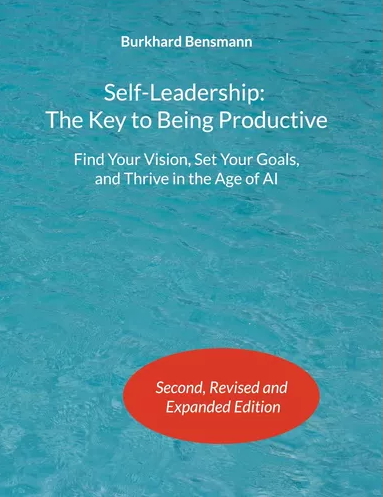
If you want to improve your Self-Leadership: use my book “Self-Leadership. The Key to Being Productive” (second, revised and expanded edition, 2025).

To purchase the book:

BoD Bookshop

Amazon

and your local bookstore!


Music Intro & Outro by Joakim Karud http://soundcloud.com/joakimkarud

SL016 Learning in the Age of AI

Interview with Expert Professor Frank Ziegele

The way we learn is changing. Alternative learning platforms like Coursera, LinkedIn Learning, and even YouTube are flourishing. How are universities responding?

Artificial intelligence – both as a learning tool and as a disruptor of graduate employment – is challenging the traditional value of a university degree. What does this mean for business careers?

Do universities need to reinvent themselves? Let’s ask an expert.

Welcome to a new episode of Self-Leadership with Dr. Bensmann, where we explore how mastering self-leadership helps you thrive across all areas of your life.
My name is Burkhard Bensmann. As a consultant, executive coach, and professor, I support individuals in navigating the complexities of leadership and personal growth.

My guest today is Professor Dr. Frank Ziegele, Managing Director of the CHE Center for Higher Education and co-author of the book Authentic Universities. We talk about the following topics:

The future of universities: Despite the rise of platforms like Coursera, LinkedIn Learning, and YouTube, universities still have a future – but only if they adapt and redefine their identity.

From tradition to transformation: The old assumptions of disciplines, lecture halls, and linear study paths are dissolving. Universities must embrace lifelong learning, interdisciplinarity, and new modes of knowledge transfer.

Authentic Universities: Ziegele explains why universities need to build on their authentic strengths while selectively adopting transformative trends. This will lead to greater diversity, from “guidance universities” to “grand challenge universities.”

Artificial Intelligence: AI is both a tool and a disruptor. Universities must integrate AI into teaching and prepare students for careers where human-AI co-production will be the norm.

Future skills: Beyond disciplinary expertise, students must develop skills in collaboration, critical judgment, and transformation management. Challenge-based and interdisciplinary learning will be key.

Leadership in higher education: University leaders today must act as managers and change agents. Peer-learning programs, like those run by CHE, help vice presidents and deans build networks, share experiences, and strengthen their leadership.

Impact on business and society: Medium-sized companies can benefit from partnerships with universities, from applied research to talent development and regional innovation ecosystems.

This conversation highlights why self-leadership is essential for navigating change—whether in academia, business, or personal growth.


link to the Book

https://www.che.de/en/2025/a-future-proof-university-must-be-an-authentic-university/

link to CHE


Music Into, bridge & Outro by Joakim Karud http://soundcloud.com/joakimkarud

SL015 Create Strong Connections

The Fourth of the Seven Fields of Self-Leadership

Who are the people you can really count on?
Which relationships give you energy—and which quietly drain it?
Do you deliberately invest in your network, or do you just let it “happen”?

In this episode, we dive into the fourth field of my Seven Fields of Self-Leadership model: Coworkers, Partners, and Networks.

Welcome to a new episode of Self-Leadership with Dr. Bensmann, where we explore how mastering self-leadership helps you thrive across all areas of your life. My name is Burkhard Bensmann. As a consultant, executive coach, and professor, I focus on helping individuals navigate the complexities of leadership and personal growth.

Self-leadership is not isolation. It is about building meaningful, reliable, and energizing connections—while also learning to prune relationships that no longer serve your mission. We’ll explore three perspectives: coworkers, partners, and networks. Then I’ll share a set of practical mini-tools and reflections that you can try this week.

Part 1 – Coworkers: Respect, Roles, and Resilience

Let’s begin with coworkers—the people you spend hours, days, often years with.

The historian Yuval Noah Harari, in Homo Deus, argues that Homo sapiens conquered the world not because of superior intelligence or better tools, but because of our unique ability to cooperate flexibly in large groups. That skill is as relevant in your daily work life as it was for our species’ survival.

But effective collaboration doesn’t just “happen.” It requires:

  • Mutual respect – seeing coworkers as partners, not just functions.
  • Clarity of roles – avoiding the gray zones where friction builds up.
  • Psychological safety – the freedom to voice ideas, challenge assumptions, and admit mistakes without fear.

Ask yourself:

  • Do your coworkers feel they can speak openly with you?
  • Do you yourself experience safety in your daily collaborations?
  • Where are roles and expectations unclear—and what is the cost of that?

Peter Senge, who introduced the concept of the “learning organization,” emphasizes that sustainable organizations are built on open communication, shared visions, and collective learning. In that sense, a team is not a hierarchy of command and control—it is an ensemble, like a jazz band, where each player brings their own strengths while listening carefully to the others.
A well-led coworker relationship creates energy and resilience. It turns the daily grind into a space of shared learning. But if mutual respect and safety are missing, collaboration quickly becomes a drain on motivation. So here is the key message:
Your effectiveness as a leader is always linked to the effectiveness of your coworkers. Invest in those relationships deliberately, not just functionally.

Part 2 – Partners: Complementary Strengths and Trust

Now, let’s move to partners—whether business partners, project collaborators, or your closest personal relationships. No one creates lasting impact alone. Successful leaders know their own strengths, and—just as important—they know their blind spots. The most effective partnerships are those where complementary skills and qualities come together.

Think about it:

  • Where are you strong, and where are you weak?
  • Which of your current partners balance those weaknesses?
  • And where do you still try to “do it all” yourself, even though someone else could do it better—or with more joy?

Partnerships, however, don’t run on autopilot. They require trust, reciprocity, and clarity.
Trust is built through reliability—doing what you say you will do.
Reciprocity means not keeping score, but ensuring that the flow of support goes both ways.
And clarity means being honest about roles, boundaries, and expectations.
From my interviews with leaders, I’ve heard a recurring regret: not clarifying expectations with their closest partners early enough—especially with co-founders or even life partners. Ambiguity creates frustration. Clarity creates freedom.

So, ask yourself:
Have you had the conversations that matter most?
Are the rules of engagement with your partners explicit—or just assumed?

Strong partnerships are not about dependency. They are about synergy. When complementary strengths come together with clarity and trust, the result is resilience—and often, surprising creativity.

Part 3 – Networks: Quality Over Quantity

Finally, let’s turn to networks. We live in a world that celebrates being connected everywhere, all the time. But more is not always better. In fact, in the digital age, the challenge is not access—it’s filtering. Effective networks are not built by collecting contacts like trophies. They are built by choosing relevance, by investing in depth over breadth.

Ask yourself:

  • Which connections truly advance your mission?
  • Which groups or platforms drain your attention without delivering value?

The author Cal Newport warns us about the “insidious” design of social media platforms. They are engineered to keep us hooked, convincing us that if we’re not constantly present, we’ll miss out. That’s why leaders must evaluate digital networking with a strict cost-benefit lens:
Does this platform, or this connection, actually help me succeed and flourish?
If not, it may be time to step back.

One executive I worked with found relief simply by setting time boundaries: he checks LinkedIn only once a day, at lunchtime. That simple limit preserved focus while still keeping him connected. But remember: networking is not just about what you take—it’s about what you give. True leaders share what they’ve learned, mentor others, and become reliable nodes in their networks. This is what creates long-term trust and reputation.

So ask yourself:
In your networks, are you mainly a consumer—or also a contributor?

Practical Mini-Tools

Here are three practices you can experiment with this week. Try them, and see what changes:

  1. Energy Balance Check
    Write down five people who consistently energize you, and five who drain you.
    Look for patterns. Are you spending too much time with the latter? Can you shift your attention toward those who lift you up? This is not about being selfish—it’s about managing your energy strategically.
  2. Networking Diet
    Just as you would with food, define healthy boundaries for networking.
    Set fixed time slots for checking digital platforms. Replace endless scrolling with intentional connection. Think of it as moving from empty calories to nutritious meals.
  3. Trust Signals
    Reflect on whether you are sending the right signals to others.
    Do you consistently demonstrate reliability?
    Do you practice reciprocity—giving as well as taking?
    Do you communicate respect, even in small interactions?
    These micro-signals add up. They shape whether people see you as a trustworthy partner—or as someone to be avoided.

Final Reflections and Action

Let’s bring it together. Self-leadership is not self-optimization in isolation. It is about weaving yourself into a fabric of meaningful relationships—coworkers, partners, and networks—that amplify your strengths, challenge your assumptions, and safeguard your resilience. So, this week, I invite you to reflect on three questions:

  1. Which coworker relationship could benefit from more clarity or respect?
  2. Which partnership needs an honest conversation about roles and expectations?
  3. Which part of your network is worth pruning—so that space opens for relationships that truly matter?

Remember: networks don’t just expand your reach. They help you stay grounded, supported, and resilient in the long run.

And here’s the closing challenge:
What one relationship deserves your deliberate investment this week?
Strong connections are not built overnight. They are built through daily choices—through the way you show up, the clarity you create, and the respect you demonstrate.

That’s the essence of the fourth field of self-leadership: Coworkers, Partners, and Networks. If you found today’s episode valuable, share it with someone who should think about their Coworkers, Partners or Networks.


And if you are looking for active support, contact me through my website or by email to bb@bensmann-consulting.com and inquire about a Deep Dive Session.


Music Into & Outro by Joakim Karud http://soundcloud.com/joakimkarud

SL014 Recognizing Relevance

A Key Competence for Leaders

  • How often do you feel that your day is dominated by urgencies that, in the end, have little real impact?
  • How often do you plan to work on a central strategic task – and then find yourself lost in emails, coordination, or trivial matters instead?
  • How often do you feel overwhelmed by the sheer flood of information and options – and the question remains: What is truly relevant here?

Welcome to a new episode of Self-Leadership with Dr. Bensmann, where we explore how mastering self-leadership helps you thrive across all areas of your life. My name is Burkhard Bensmann. As a consultant, executive coach, and professor, I focus on helping individuals navigate the complexities of leadership and personal growth.

1. Let us first figure out: What do we mean by relevance?

The word comes from the Latin relevare – “to lift up, to highlight.” Something is relevant if it should stand out compared to other things because it is important for a goal, a situation, or a decision. In a sea of information, our relevance filters determine where we direct our limited attention. Without them, we would be overwhelmed. And here is my key point: relevance is not an abstract idea. It is a practical, everyday capability. Leaders who fail to recognize relevance run the risk of remaining in a constant reaction mode – instead of shaping and directing.

2. Why is relevance even more important today?

The ability to determine what is relevant has always been crucial. But under current conditions, it has become dramatically more important:

Information overload – we live in permanent overstimulation.

Density of crises – pandemic, geopolitical tensions, climate change, technological disruptions. Everything seems to demand attention at once.

Rising expectations – employees expect clarity, priorities, and orientation.

3. The psychological and physiological foundations

To understand relevance, it helps to take a look at the brain. From the perspective of Neurobiology: In the limbic system – especially in the amygdala – stimuli are evaluated for significance. Threats are prioritized immediately. Reward signals and social cues also receive preferential processing. Neurotransmitters such as dopamine act as amplifiers. And from the perspective of Psychology: Relevance is always subjective. It depends on:

• our goals,

• our values,

• our experiences.

To give you an example: Someone who values innovation will quickly notice opportunities and creative impulses. Someone focused on security will immediately detect risks.

4. Can we strengthen our ability to judge what is relevant?

Yes. While we are born with basic biological patterns, we can train our competence in recognizing relevance.

The 3×3 Framework for Training Relevance

1. Attention – Sharpening Perception

  1. Morning Attentional Warm-up – begin the day with two minutes of noticing sights, sounds, and sensations.
  2. Focused Presence – in meetings, give full attention to one colleague at a time (tone, gestures, signals). Attention sharpens when you deliberately practice presence.
  3. Conscious Breaks –  Overload blinds us to the essential. Create spaces of pause to regain clarity.

2. Reflection – Guiding with Purpose

  1. Clarify Mission and Values – know what you stand for to recognize what truly counts.
  2. Quick Alignment Checks – during the week, ask: “Is this aligned with my mission and my role?” This keeps your inner compass active.
  3. Relevance Journal – each evening, note what was genuinely relevant today – and why.

3. Action – Designing for Focus

  1. Differentiate Importance vs. Urgency – Do your definition of „important“ and „urgent“. Apply methods like the Eisenhower Matrix or ask: “Does this move us forward or just keep us busy?”
  2. Cognitive Control Practices – work in 45-minute focus sprints, mute notifications, and set “do not disturb” times. Regain control over your tools, such as your Smartphone. Protect your focus and your deep work.
  3. Collective Scouting & Intuition – ask your team weekly: “Were we working on what really mattered?” Also notice body signals and gut feelings, then test them rationally.

By training attention, self-reflection, and cognitive control in concrete, small steps, leaders can build a solid foundation for better relevance decisions.

5. A call to action

Reflection impulse for you – In the coming days, ask yourself:

• What are the truly relevant issues for my organization in the next 12 months?

• How do I recognize that something is relevant – and not just urgent?

• Where am I currently being distracted by only apparent relevance?

6. Conclusion

Relevance is not a side issue. It is part of the core architecture of effective leadership. Leaders who fail to grasp what is truly relevant risk being consumed by noise, urgency, and endless activity. They might be busy, but they are not impactful. Those who sharpen their ability to recognize and convey relevance provide something invaluable: orientation. And orientation is what people look for in times of complexity and uncertainty. It helps teams focus, reduces stress, and builds trust.

7. Closing

This was today’s episode of Self-Leadership with Dr. Bensmann. If you found inspiration here, I would appreciate it if you share the podcast with others. And perhaps you want to jot down right away: What was truly relevant for you in this episode?


Inquire about a Transformative Session

And if you are looking for active support, contact me through my website or by email to bb@bensmann-consulting.com and inquire about a Deep Dive Session.


Music Into & Outro by Joakim Karud http://soundcloud.com/joakimkarud

Transformation Openness: A Pathway to Self-Guided Growth

Listen to the full podcast episode here: Podcast SL014

In an era marked by complexity, disruption, and exponential technological advances, transformation is no longer a choice—it’s a constant. But how we engage with it makes all the difference. In my latest podcast episode, I explore a key capacity I call “transformation openness”: a self-leadership skill that enables you to actively and mindfully navigate change.
Unlike passive flexibility or chaotic reinvention, transformation openness is about grounded, intentional openness. It involves embracing uncertainty while staying aligned with your identity and values.
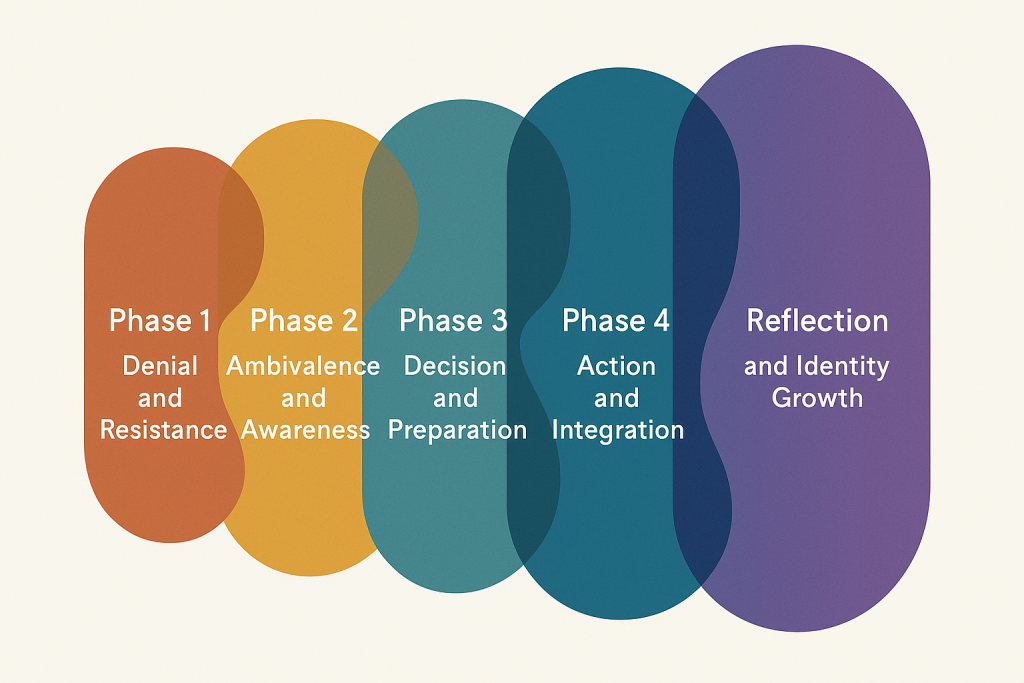
Drawing on leading psychological models like the Transtheoretical Model, ACT, and Bandura’s concept of self-efficacy, I introduce a five-phase model:

Denial and Resistance: Recognize fear-based responses and create emotional safety.
Ambivalence and Awareness: Clarify values and imagine alternate futures.
Decision and Preparation: Ensure your next steps are congruent with your identity.
Action and Integration: Focus on feedback loops and daily rituals.
Reflection and Identity Growth: Let change become part of who you are.

Importantly, transformation openness also requires caution:
Over-adaptability can disconnect you from your core.
Openness should not mean compliance with every trend.
Resistance should be respected, not suppressed.
True growth needs time and recovery.

The episode closes with five practical invitations:
Notice resistance
Clarify your values
Prepare for small, meaningful actions
Respect your personal rhythm
Stay in dialogue

These practices turn insight into momentum and help you shape change from within.
If you’re facing transitions in your leadership role, your career, or your identity, this episode is for you.

Listen to the full episode of “Self-Leadership with Dr. Bensmann” here.

SL013 Transformation Openness: Embrace Change, Enable Growth

How to actively cultivate transformation openness in times of complexity and disruption

When was the last time you truly embraced change – without resisting, doubting, or delaying?
Have you ever found yourself clinging to routines, even when they no longer serve you?
And what would it mean if transformation wasn’t something done to you – but something you actively choose? This episode is about a critical leadership capacity: transformation openness. Not blind flexibility, not chaos, but a grounded, intelligent openness to change that starts with self-leadership.

Welcome to a new episode of Self-Leadership with Dr. Bensmann, where we explore how mastering self-leadership helps you thrive across all areas of your life.

My name is Burkhard Bensmann. As an acknowledged expert for Self-Leadership my clients are decision-makers, leaders, and CEOs. With tailor-made interventions I am helping them navigate the complexities of leadership and unlock their personal growth potential.

Overview – What This Episode Covers

In today’s episode, we’ll look at a powerful yet often misunderstood quality for which I have coined the term transformation openness.

We’ll explore:

• Why this openness matters more than ever—especially in times of complexity and disruption,

• What current psychological theories teach us about the stages of inner change,

• How resistance and fear are normal parts of any growth process, and

• I explain my five-phase model I suggest to help you understand and actively cultivate transformation openness.

We’ll also address a word of caution—because even transformation can be overdone.


Part 1 – Why Transformation Openness Matters

Let’s start with the “why.” The world is not just changing – it’s transforming. Old structures collapse. New technologies emerge. Leadership roles are being redefined almost weekly. So here’s the truth:

What you need is not just the ability to manage change, but the mindset to engage with it intentionally. Transformation openness is the inner readiness to notice, interpret, and respond to change – without falling into panic or paralysis. Think of it like sailing. You can’t control the wind – but you can adjust your sails. Transformation openness is the skill of adjusting your sails with clarity and confidence.


Part 2 – Understanding Inner Change: Lessons from Psychology

Modern psychology offers us several helpful models of how change really happens –inside a person. One widely researched theory is the Transtheoretical Model by Prochaska and DiClemente.
It describes change as a process with distinct stages – from denial to contemplation, to preparation, action, and finally integration. Change isn’t linear – it loops. You may relapse. You may resist. That’s human.

Another insight comes from Acceptance and Commitment Therapy (ACT).
Here, the idea is not to eliminate discomfort—but to act in alignment with your values, even when fear or uncertainty show up.

And then there’s self-efficacy, a term coined by psychologist Albert Bandura.
This is your belief that you can create change, even under difficult conditions. It’s the internal voice that says: “This is hard, but I’ll figure it out.”

Together, these theories tell us: You don’t need to love change. But you need to work with it—intentionally and flexibly.


Part 3 – The Five Phases of Transformation Openness

Based on these theories and my coaching experience, I suggest a simple but powerful model. I call it the Five Phases of Transformation Openness. This model is a pragmatic integration of some of the most effective approaches I’ve encountered. It doesn’t claim to reinvent the wheel – rather, it stands on the shoulders of giants. I’m deeply grateful for the foundational work of those who have shaped our understanding of transformation, mindset, and human development.

Graphic created with ChatGPT

Phase 1 – Denial and Resistance
“This can’t be happening. I don’t want this.”

This is the moment when your inner system slams on the brakes. It’s a deeply human, protective response—often rooted in fear, uncertainty, or past disappointments. You might find yourself avoiding conversations, pushing back emotionally, or mentally retreating into old patterns.

Your task here is not to force change. Instead, create emotional safety—for yourself or your team. Slow down. Be present. Ask yourself:

“What exactly am I afraid of losing?”
“What part of me is resisting—and what is it trying to protect?”

This is a powerful moment to use techniques like reframing or anchoring. They help you gently shift your perspective—without denying your emotions.

Phase 2 – Ambivalence and Awareness
“This might be necessary—but I’m torn.”

Here, a new awareness begins to surface. You’re no longer fully resisting, but you’re not committed either. There’s a tension between the pull of the familiar and the whispers of what could be. This is the ideal time for guided reflection. Clarify your values. Ask yourself what truly matters. Imagine alternative futures—not in spreadsheets, but in mental images.

One practical tool is timeline work: Visualize your future self one year from now. What are they doing? Feeling? Creating? Or try working with metaphors—like the “inner journey” or “crossing a threshold.” They activate deeper insights.

Phase 3 – Decision and Preparation
“I’m ready to engage—but how?”

This phase is where clarity kicks in. There’s an internal “yes.” You recognize: It’s time to move. But now the challenge is: What’s the plan? Is the decision aligned with who I truly am?

This is where the ecology check becomes crucial. Ask: “Does this decision feel congruent in my body?” “Do I have the energy, support, and internal permission to act?” Develop a simple, flexible roadmap—one that honors your identity and doesn’t create overwhelm.

Phase 4 – Action and Integration
“I’m in it. I’m doing the work.”

This is the “messy middle.” The phase where vision meets reality. You’ve moved into action—but now you’re learning, adapting, and often stumbling. That’s exactly how transformation works.
The key is: tiny rituals, feedback loops, and peer support. Whether it’s a morning check-in, a 10-minute journaling habit, or weekly coaching—small systems hold the change in motion. Remind yourself: This is not about perfection. It’s about momentum.

Phase 5 – Reflection and Identity Growth
“I’m not the same person I was.”

This is the quiet, often surprising moment when you realize: something shifted. You not only survived the change—you’ve internalized it. It’s now part of who you are. Take time to pause and reflect: “What did I learn—not just about the situation, but about myself?” “What strengths emerged that I didn’t know I had?”

This is where change becomes identity-based.
You no longer “do transformation”—you embody it. And that gives you confidence for the next cycle.


Part 4 – A Word of Caution: The Side Effects of Transformation Openness

Now, just like any powerful medicine, transformation openness has side effects. Here’s your leadership “warning label”:

Warning 1: Too much openness can destabilize you.
“If you’re constantly adapting, you may lose your inner compass.”

Being open to change is powerful. But if you’re always adapting to your surroundings, constantly shifting priorities, or chasing every new trend, you risk disconnecting from your core.
I’ve seen this in leaders who try to meet every expectation—only to feel exhausted and directionless.

Stay rooted in your values and long-term vision.
Ask yourself: “What do I want to stay true to—even in times of change?”

Your transformation should be guided by identity, not by urgency.

Warning 2: Don’t confuse openness with over-compliance.
“Just because change is trendy doesn’t mean it’s right for you.”

Sometimes people confuse openness with obedience. They say yes to every initiative, every new tool, every reorganization—just to appear flexible.
But that’s not transformation. That’s submission. And it can damage your integrity.

Practice mindful selectivity. Ask yourself: “Is this change aligned with my purpose—or am I just trying to fit in?”

Being truly open includes the courage to say no.

Warning 3: Resistance is not the enemy.
“Trying to eliminate fear or skepticism too quickly can backfire.”

We’re often told to “overcome resistance.” But in my experience, resistance is a form of intelligence.
It’s your system saying: “Wait. Something feels off.”
Maybe the timing isn’t right. Maybe your needs weren’t heard. Maybe your values are being challenged.

Respect resistance.
Instead of pushing it away, get curious: “What is this resistance protecting? What needs to be acknowledged or renegotiated?” Wise leaders listen to resistance before leading through it.

Warning 4: Transformation is not a race.
“Pauses, rest, and reflection are essential.”

In our fast-paced world, even change has become a competition. But sustainable transformation needs time. It needs space. Growth is not linear. It includes setbacks, pauses, and integration periods.

Build in recovery cycles.
Protect time to reflect. Honor the transitions between phases—not just the milestones.

Stillness is not a delay. It’s a dimension of change.

Think of this as the “informed consent” of transformation work. Real change is possible—but only when it’s honest, embodied, and self-led.


Final Reflections and Call to Action

So—let’s bring this all together. You’ve just heard a practical framework, a map for navigating the inner terrain of transformation openness. But what does it mean for you—today?
This is where insight meets action. Because reflection without movement leads to stagnation. And action without reflection leads to misalignment. So here’s how you can begin, right now:

1. Notice resistance – name it, explore it.

Think about a current change you’re facing—maybe at work, in your role, or in your private life.
Where do you feel tension? Avoidance? Fatigue? Instead of pushing it away, pause and investigate: “What am I afraid of losing?” “What part of me wants to stay where I am—and why?” Remember: resistance is not a flaw. It’s information. It’s a signal worth decoding.

Try this: Write down your top three resistances. For each, ask: “What is this trying to protect?”
This simple act turns fear into insight.

2. Clarify your values – they are your compass.

Transformation without orientation can be dangerous. That’s why your values are not optional—they’re essential.

Ask yourself: “What do I want to stay loyal to—regardless of change?” “What do I stand for, even when the environment shifts?”

Try this: Choose three values that truly guide you. Then ask: “How visible are these in my current decisions?”

This step roots your transformation in identity—not just in trends.

3. Prepare for action – even small steps matter.

You don’t need a 10-year plan.
But you do need momentum—and that starts with micro-movements. What’s one shift you’ve been postponing? One habit, one conversation, one experiment?

Try this: Define one concrete step for the next 48 hours. Keep it small. Then commit to it publicly—or at least to a trusted peer.

This turns openness into action.

4. Respect your rhythm – change doesn’t have to be rushed.

We often feel pressured to transform fast. But meaningful change follows its own rhythm—like breathing, like seasons. You need moments of rest and recovery just as much as moments of sprinting.

Try this: Build a pause into your week. A walk. A journaling session. A quiet morning without screens.
Don’t just move—integrate.

Because growth isn’t always visible. Sometimes, it’s underground.

5. Stay in dialogue – with yourself and trusted others.

Transformation thrives in connection. You don’t have to figure this out alone. Share your thoughts. Ask for feedback. Invite perspective. Talk to a mentor, a coach, or a peer who challenges and supports you.

Try this: Reach out to one person this week and say: “I’m reflecting on some changes. Can we talk about this over coffee or Zoom?”

Openness grows when we open up.


Inquire about a Transformative Session

And if you are looking for active support, contact me through my website or by email to bb@bensmann-consulting.com and inquire about a Deep Dive Session.


Music Into & Outro by Joakim Karud http://soundcloud.com/joakimkarud

Back from Colombia

– and still deeply inspired.

Our journey through Colombia this July was far more than a professional project. It was a vivid, immersive experience – filled with powerful impressions, generous encounters, and deep learning moments. Together with my partner Anja Termöllen, I spent three weeks exploring the cultural, linguistic, and institutional landscape of Colombia – with the goal of expanding our international engagement in the fields of self-leadership, coaching, and health-oriented development.

Photo: Bensmann

Starting in Bogotá, we took in the city’s topography from Monserrate, reflected on identity and history at several museums, and engaged in inspiring conversations with the AHK Bogotá – special thanks to Carolina Santana and Mischa Groh – about leadership and resilience. We discussed potential future formats, and these exchanges once again demonstrated how relevant the topics of conscious self-leadership, resilience, and mindfulness are across cultural boundaries.

Photo: AHK Bogotá

In Medellín, the next stage began: a custom-designed language and cultural immersion course, created and led by our outstanding language teacher Rubén Montoya. During intensive days – including field trips, mountain walks, and shared reflections – we worked on translating our professional language and concepts into Spanish. I am especially grateful that Rubén tailored the sessions around our core topics such as self-leadership, mindfulness, and coaching. ¡Gracias de corazón, Rubén!

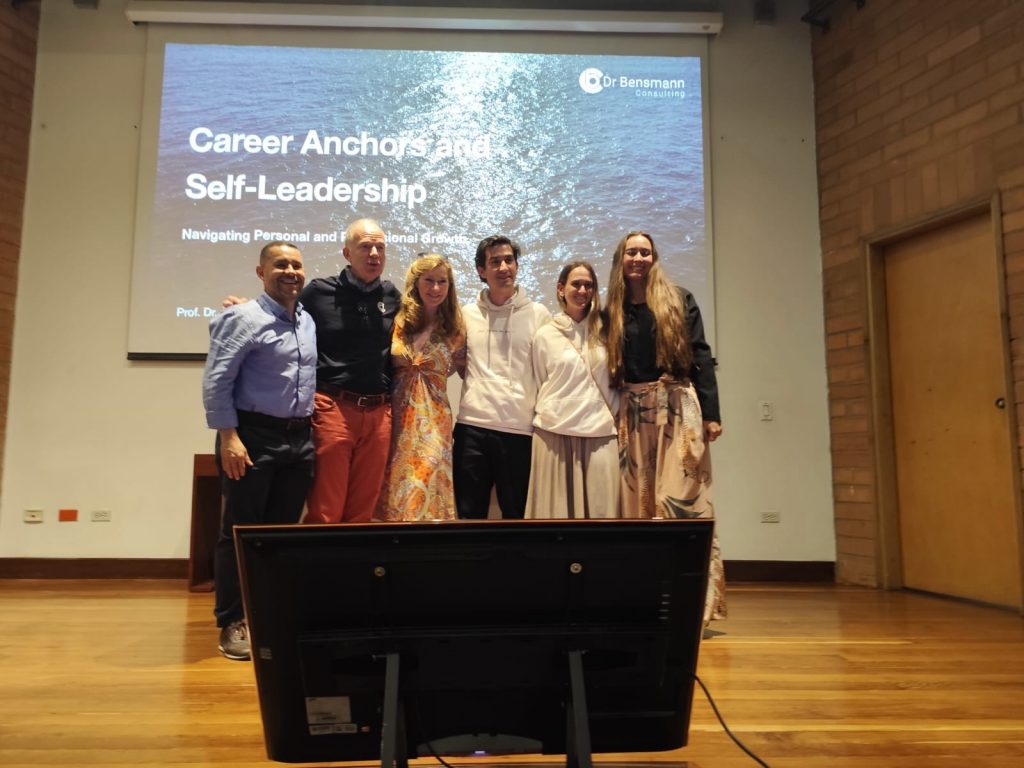
A personal highlight for both Anja and me was the opportunity to co-teach at EAFIT University in Medellín, where we presented key insights on Career Anchors and Self-Leadership to a highly engaged audience of students, faculty, and university leaders. Many thanks to Pablo Ángel for facilitating this opportunity and for his thoughtful support throughout the process. Thanks as well to Ana Maria Ortega Alvarez, Christina Velez-Valencia, and Fernando Alexander Garzón-Lasso – to name just a few of our supporters. And thank you to #CarstenSchröder for making the connection to EAFIT! This experience confirmed my belief that the concept of self-leadership is globally relevant – and that Colombia has the potential to become a long-term partner in developing future formats.

Photo: EAFIT

Anja and I also had the pleasure of meeting Catalina Vergara from Awaris Latam, with whom we exchanged perspectives on resilience and mental fitness in organizations. The connection between her work and the self-leadership approach I’ve been refining for over 15 years was both surprising and promising.

Another unforgettable chapter of our journey was our stay on a small coffee farm in the Eje Cafetero region. Immersed in nature, surrounded by lush greenery and cloud forests, we experienced the meticulous process of coffee cultivation – from bean to cup. It was not just educational, but deeply touching: we were warmly welcomed into the everyday life of the farm, sharing meals, stories, and routines with our hosts.

Photo: Bensmann

A heartfelt thank-you to Estrella and Carmen for your generosity and for making us feel part of the family. This stay offered us an important additional perspective on Colombia – one rooted in rural life, community spirit, and respect for manual craftsmanship. It reminded us how connected well-being, culture, and sustainability are – and how valuable it is to slow down and truly observe.

Looking ahead, this journey has inspired us to move forward with:

  • Tailor-made workshops for leaders of #AHKs in South America
  • Ideas for bilingual retreat formats
  • Local and international cooperation around health & leadership
  • A hybrid Spanish-language self-leadership micro-course or masterclass
  • Deeper integration of cultural awareness into our coaching practice

Colombia touched us – professionally, intellectually, and emotionally.
We return not only with new connections and friendships, but with a sense of clarity, fresh perspectives, and renewed energy.

SL012 Take Care Of Yourself – Body, Soul, and Mind

The Third of the Seven Fields of Self-Leadership

When was the last time you took a real break—no phone, no agenda, just space to breathe?
Do you trust your own thoughts, or are you being silently shaped by your social feed?
And how well do you actually take care of your body, your soul, and your mind?
Do you create moments for reflection—or are you always rushing to the next thing?

In this episode, we explore the third field of my Seven Fields of Self-Leadership model:
Body, Soul, and Mind.
This field brings together your physical awareness and care, your spiritual and emotional depth, and your mental agility.
Taken together, they form the foundation for resilience, clarity, and sustainable performance.
We’ll look at how small daily habits—mental, physical, emotional—shape your ability to lead yourself and others effectively.
And I’ll ask you a few bold questions to help you check in with yourself.

Part 1 – Body: Rhythm, Rituals, Resilience
Let’s begin with the body—our most tangible starting point.
True self-leadership means being in touch with your physical self. That includes listening to your natural rhythms, caring for your energy reserves, and building rituals that support performance and recovery.
So I ask you:
What rhythms shape your day?
Do you work with your body—or against it?
In my coaching conversations, I hear repeatedly that many leaders find balance and clarity through endurance sports, yoga, or even long silent walks. It’s not about becoming a fitness guru—it’s about building a sustainable foundation for your mind to work at its best.
Simple rituals—like a morning stretch, drinking water consciously, or a walk between meetings—can reset your inner balance.
And yes, it requires self-discipline. But that’s the essence of self-leadership: choosing what sustains you instead of what merely stimulates you.

Part 2 – Mind: Thought Patterns and Mental Models
Let’s shift to the mind—your beliefs, assumptions, and inner dialogue.
What do you believe about yourself, especially when facing a challenge?
Do you trust in your capacity to shape outcomes—or do you fall into doubt?
Here, the concept of self-efficacy is crucial. Introduced by Albert Bandura, it describes our belief in our ability to handle situations and produce results.
It’s not motivational fluff—it’s a scientifically backed mindset that makes the difference between action and avoidance.
If your inner narrative says “I’ll figure it out,” you’re already on your way.
If it says “I always mess this up,” your actions—and your results—will follow that script.
This is why working on your thought patterns is not optional for self-leadership. It’s core work.
Start by identifying your internal stories. Where did they come from? Are they still serving you?
I invite you to revisit our earlier episode, Self-Leadership and Mental Strength. You’ll find practical tools and deeper insights there—just head over to bensmann-consulting.com/self-leadership-and-mental-strength.

Part 3 – Soul: Inner Attitude, Purpose, and Flow Balance
Now to the soul—perhaps the most elusive, yet most essential dimension.
In this context, soul refers to your sense of meaning, inner peace, and emotional balance. It also includes your values, your attitude toward life, and your ability to reflect and recalibrate.
Too many high-performing people operate on a transactional level: tasks, goals, results.
But without depth and alignment, even the most “successful” lives can feel hollow.
So here’s the key idea:
Don’t aim for a static work-life balance—it doesn’t exist. Instead, strive for a flow balance between your life areas.
Like a mobilé, the balance constantly shifts. When one part moves, others adjust.
A mobile is a kinetic sculpture made of delicately balanced or suspended components that move in response to air currents or motor power.
Which part of your mobilé is out of sync right now?
What would help you recalibrate?
It’s also time to ask yourself:
When was the last time you allowed yourself to be bored?
Leisure isn’t laziness. It’s a form of mental hygiene.
Brain researchers like Daniel Goleman emphasize that our attention, like a muscle, fatigues. We need periods of aimlessness, nature, and stillness to restore cognitive power.
Go outside. Leave the phone. Watch the clouds.
In these unstructured moments, our best ideas—and deepest calm—often surface.

Part 4 – Mindfulness and Strength for the Future
Mindfulness isn’t just a buzzword—it’s a necessity.
As trend researcher Matthias Horx puts it, mindfulness means that we’re not helplessly driven by our emotions. We become observers of our inner landscape. We develop a meta-awareness—watching ourselves think, feel, and act.
That’s powerful. That’s leadership.
Because mindful people don’t just react—they choose.
This is where you can begin right away:

  • Start a small daily ritual—like 5 minutes of silence or journaling.
  • Identify a limiting belief—and reframe it.
  • Move your body intentionally, even if just for 10 minutes.
    Over time, these tiny acts become anchors.

Excursus – Leading Yourself in the Age of AI
Let’s take a brief detour.
Self-leadership today also means understanding the systems that influence us—one of the most powerful being Artificial Intelligence.

AI already curates your news, shapes your social media feed, and suggests what you should think, buy, or do next.
But here’s the key: AI is not just a technological topic—it’s a leadership topic.

As I’ve discussed in recent blog posts and podcast episodes, AI systems are increasingly acting like invisible advisors.
They can support your productivity—or subtly steer your attention.
That’s why self-leadership in the age of AI means building a personal “AI cockpit”: a conscious overview of where and how AI influences your life and work.

You don’t have to be a tech expert.
But you do need clarity:
What tools actually serve your mission?
Which systems support your well-being, your focus, your values?

Ask yourself:
Are you leading the tools—or are the tools leading you?

AI-Based Call-to-Action
So here’s your second challenge for this week:
Take 10 minutes to reflect on your digital environment.

  • What AI-powered tools do you use daily?
  • Are they aligned with your personal goals—or are they just noise?
  • Can you reclaim one part of your attention?

Choose one app or tool and either remove, replace, or reframe how you use it.
Self-leadership in a digital age begins with conscious choices—both analog and algorithmic.

Final Reflections and Action
So, how do we bring it all together?

  1. Nourish your body – movement, sleep, nutrition.
  2. Train your mind – challenge old thought patterns.
  3. Listen to your soul – what’s really meaningful now?
  4. Rebalance your life areas – adjust like a mobilé, not a scale.
  5. Protect your attention – especially from digital overload.
    And above all:
    What would it mean for you to lead yourself well—today?

Music Into & Outro by Joakim Karud http://soundcloud.com/joakimkarud
SL011 Career Anchors And Self Leadership

Navigating with Your Inner Compass

Have you ever felt torn between what you should do and what you really want to do in your career?
Do you sometimes wonder whether your current role reflects who you truly are?
And what if you had an inner compass that could guide you more clearly—especially in times of change?

Today’s episode is about Career Anchors—a powerful concept that can help you understand what drives you at work.

We’ll connect this concept with the core idea of Self-Leadership—how you lead yourself toward meaningful, satisfying work and a life that feels aligned.

You’ll learn:

• What Career Anchors are
• How they influence your motivation and decisions
• How they support your self-leadership
• And finally, you’ll be guided through a short reflection exercise

Let’s get started.

Part 1 – What Is Self-Leadership? 

First, a quick reminder of what I mean by Self-Leadership. I define Self-Leadership as “attitudes and methods for the goal-oriented leadership of oneself.” It is based on three pillars:

Self-awareness
Self-responsibility
Self-direction

This approach helps you create clarity about what matters most, stay on course in a turbulent world, and act in alignment with your deeper goals. But how do you know what matters most? That’s where Career Anchors come in.

Part 2 – Understanding Career Anchors

The concept of Career Anchors were first introduced by Edgar Schein and has been recently reimagined in 2023 by Schein, Van Maanen, and Peter Schein. Career Anchors describe the core values, motivations, and needs that guide your career decisions—whether you’re aware of them or not. Think of them as inner reference points. When you honor them, you feel energized. When you ignore them, you feel lost or frustrated. Here are the eight Career Anchors:

 1. Technical/Functional (TF)

This anchor reflects a deep need to become truly excellent in a specific field. People with this anchor are driven by expertise and problem-solving. They enjoy mastering a domain and being recognized for their know-how. Picture someone who doesn’t need a leadership title—but thrives when solving complex technical challenges or perfecting systems. They often feel most fulfilled when they are “in the zone” of their specialization.

Self-Leadership implications:

Build your role around deep work. Set goals that challenge your skillset. Look for environments where craftsmanship is valued—and avoid being pulled into roles that take you too far from what you do best.

Ask yourself: “Where do I want to go deeper instead of wider?”

2. Autonomy/Independence (AU)

People with this anchor value freedom over structure. They want to shape their own work—when, where, and how it happens. This might show up as a desire to work remotely, to reject micromanagement, or to create a business that lets you define your own pace. What matters most is self-direction.

Self-Leadership implications:

Design your work so that it gives you room to decide. Structure your day, your processes, and even your collaborations in a way that respects your independence. Watch for roles where rigid systems undermine your drive.

Ask yourself: “Where do I feel boxed in—and where do I feel free?”

3. Challenge & Risk (C&R)

This anchor is about pushing boundaries. If this is your anchor, you seek complex problems, ambitious goals, and high-stakes situations. You’re energized by uncertainty—by the thrill of figuring things out when others step back. You may not need constant adrenaline, but you do need stimulation and growth.

Self-Leadership implications:

Keep your stretch goals visible. Volunteer for projects that scare you—in a good way. But also learn to manage recovery, because intensity needs balance.

Ask yourself: “What challenges am I ready for—but maybe avoiding?”

 4. Entrepreneurial Creativity (EC)

This anchor is about building something new. You’re excited by innovation, by launching projects, or by creating solutions where none existed before. People with this anchor don’t wait for permission—they experiment, prototype, and learn through action. Impact matters, but so does independence and originality.

Self-Leadership implications:

You need time and space to create. Build routines that support innovation—whiteboard sessions, idea journals, or side projects. Look for collaborators who energize you rather than constrain you.

Ask yourself: “What have I created lately that I’m proud of?”

5. General Management (GM)

You are drawn to leading people and steering complex systems. You enjoy aligning teams, making strategic decisions, and delivering results through others. It’s not just about control—it’s about seeing the big picture and coordinating moving parts. You thrive on responsibility and influence.

Self-Leadership implications:

Sharpen your systems thinking. Strengthen your communication skills. And regularly check that your leadership remains values-driven—not just performance-driven.

Ask yourself: “Am I leading with clarity—or just managing complexity?”

6. Service / Dedication to a Cause (SV)

This anchor is rooted in meaning and contribution. You want to make a positive difference—to help people, solve societal issues, or support a cause bigger than yourself. Success is measured not just in numbers, but in impact. You feel fulfilled when your work reflects your deeper beliefs.

Self-Leadership implications:

Align your goals with your values. Don’t ignore purpose when making decisions about your role or organization. And take time to reconnect with your why—especially in difficult moments.

Ask yourself: “What kind of impact do I want to have this year?”

7. Stability & Security (S&S)

This anchor is about predictability, consistency, and reliability. You want to work in an environment where expectations are clear, change is manageable, and long-term planning is possible. You may not resist all change—but you value continuity and low risk. This anchor often shows up in people who’ve experienced instability in the past.

Self-Leadership implications:

Don’t apologize for seeking structure. Instead, choose roles that let you build routines and minimize volatility. But also stay open to evolution—security doesn’t have to mean stagnation.

Ask yourself: “What routines make me feel grounded—and which ones trap me?”

8. Life-Work Integration (LW)

This anchor reflects a deep desire to balance life’s different areas—not by separating them, but by integrating them meaningfully. You want work that allows space for family, well-being, travel, hobbies, or personal growth. You don’t want to sacrifice your life for your job—or vice versa.

Self-Leadership implications:

Define your non-negotiables clearly. Design your time with care. Say yes to flexibility—and no to false urgency. Make alignment your leadership strategy.

Ask yourself: “Am I living the way I want—or just working the way I’m told?”

Keep in mind: Most people have one or two dominant anchors that shape their career satisfaction and decisions.

Part 3 – How Career Anchors Connect with Self-Leadership 

When you combine the concept of Career Anchors with Self-Leadership, at least three powerful things happen:

1. You gain clarity

You’re better able to filter opportunities. Example: If your anchor is Autonomy, you’ll recognize that micromanagement will be toxic—no matter the salary.

2. You increase your motivation

When your work aligns with your anchor, you naturally feel more energized and committed. Example: Someone driven by Service will perform best in roles with a sense of purpose—even if they come with lower pay.

3. You navigate change with confidence

Career Anchors are not fixed forever. Maybe ten years ago, you were driven by Challenge. Today, it might be Stability. Self-Leadership helps you recognize and accept this evolution—and to adjust your goals accordingly.

Handle with care

You know me by now—I always encourage you to treat any concept, model, or framework with care. The Career Anchors are just that: a concept. A useful lens, not a label.
Test it. Use it. But don’t confuse insight with identity.
You’re not a finished product—you’re becoming. As psychologist Daniel Gilbert put it:
“We’re works in progress who think we’re finished.”

Let that sink in.

Personality is fluid. Motivation evolves. Don’t get trapped in a fixed self-concept.
Let your Career Anchor guide you—not box you in.

Reflection Exercise
Let’s pause for a moment of reflection. You may want to write down or just think through your answers.

  1. Am I doing work that reflects what I really care about?
  2. What is one bold step I can take now to move in the right direction?
  3. Where might I need to adjust my mindset or actions to reach the next level?

These questions can open the door to real change.


Download The Slides

If you found today’s episode helpful, you can download my slide deck from the Career Anchors webinar that I did for AHK Bogotá:

bensmann-consulting.com/career

Password: career2025


Music Into & Outro by Joakim Karud http://soundcloud.com/joakimkarud


On Holding and Enduring – Self-Leadership in Times of Transition

It was a quiet Monday morning when I read an article that wouldn’t let me go. In the German newspaper WELT, cultural editor Lena Karger interviewed the Austrian philologist Pamela Rath about something that sounded simple on the surface — the art of enduring. But as I read on, I realized that what Rath calls “aushalten” — to hold, to endure, to stay present in uncertainty — is perhaps one of the most underestimated skills of our time.

She spoke of this moment in history as a Zeitenwende, a tipping point or historical shift. “The old system is leaving,” she said, “but the new one is not yet here.” That resonated deeply with me.

And I thought: Isn’t this exactly what many of us are feeling? A strange in-between. The need to keep going without a clear map. To stay open, while the ground beneath us shifts.

So in this post, I want to reflect on this art of enduring — and connect it with the ideas that I published in the podcast episode Self-Leadership and Mental Strength (https://bensmann-consulting.com/self-leadership-and-mental-strength/).


A Shifting World Needs Inner Anchors

Pamela Rath described something that’s become visible in my coaching sessions as well: People feel overwhelmed not by a single crisis, but by the simultaneity of multiple tensions — climate, war, AI, polarization.
We live in a time when multiple realities seem to exist at once. When our belief systems are questioned — or collide with those of others. When we’re tempted to react to everything, immediately.

Rath’s response is not to escape or deny this turbulence. She says that we must learn to endure again. But actively.

Meaning: Not as resignation. But as self-chosen focus, reduction, and awareness of our personal thresholds.


Self-Leadership Means Knowing What You’re Holding For

In my podcast episode Self-Leadership and Mental Strength, I spoke about the difference between gritting your teeth and staying aligned.

Mental strength is not about suppressing feelings or pretending everything’s fine.
It’s about finding the inner capacity to stay connected to your values — even when you’re tired, uncertain, or misunderstood.

This is where I believe self-leadership begins. Not in heroic action. But in subtle, repeated choices:

  • To pause.
  • To feel without collapsing.
  • To wait without numbing.
  • To think and act from the inside out.

The Seven Fields as a Compass for Mental Strength

Over the years, I’ve developed a framework that many of you already know — The Seven Fields of Self-Leadership. Each field offers an anchor. A space to experiment. To realign. Let me show you how the art of “enduring” connects to them:

1. Vision & Mission
→ If I don’t know what I’m holding for, endurance turns into exhaustion.
Take time to revisit your why. Define your values not as decoration — but as fuel.

2. Body, Soul & Mind
→ We cannot endure without tending to our system.
Sleep. Breath. Presence. Mental strength begins in the nervous system — not in willpower.

3. Competencies & Self-Development
→ Resilience grows when we grow. Learn in small steps. Stay curious.
Choose one thing to explore that nourishes your sense of agency.

4. Co-Workers & Networks
→ Differences are inevitable. The question is: Can I hold a view and hold space for others?
Sometimes, leadership is enduring a tension long enough for a better conversation to emerge.

5. Processes & Structures
→ Routines help us hold chaos without collapsing.
What rhythms ground you? Morning silence? Weekly reflection? Repeated journaling?

6. Projects & Products
→ What we build reflects how we relate to uncertainty.
Tiny experiments — like I shared in the last episode — allow us to act without needing certainty first.

7. Added Value
→ When we endure with purpose, we create value — not just output.
Mental strength isn’t about being efficient. It’s about being true to what matters.


Four Tiny Practices to Build Mental Strength

Inspired by both Rath’s reflections and my own work, here are four practical ways to strengthen your capacity to endure — with presence and direction:

  1. Schedule silence
    Digital inputs erode inner clarity. Choose one hour a day without screens. Just space.
  2. Write down your “Why”
    Post it on your desk. Let it guide your daily decisions — especially under pressure.
  3. Pause before reacting
    Notice the urge to respond. On social media. In conversations. In meetings.
    Then breathe. And choose if it’s worth it.
  4. Reflect on your “holding moments”
    Each evening, ask: What did I endure today that mattered?
    And: Where did I reach my personal tipping point — and why?

Reading the WELT article reminded me that what we often call “resilience” is not just a trait — it’s a practice.
One that includes saying: This matters. This I hold.
And just as importantly: This I let pass. This I don’t need to carry.

In uncertain times, we need fewer hot takes — and more grounded presence.
More people who can hold tension without turning it into fear.
More self-leaders who know their limits — and choose consciously what they endure.

If that speaks to you — I invite you to listen to my episode on Self-Leadership and Mental Strength.
And if you want to go deeper: explore your own Seven Fields, one by one.

Let’s keep experimenting. Let’s keep holding. Together.